

Senator Bernie Sanders wants to stop the construction of new AI data centers in the United States until Congress passes strict rules on artificial intelligence. His Artificial Intelligence Data Center Moratorium Act, introduced in March 2026, links the boom in AI infrastructure to AI safety, workers’ jobs and household electricity bills. Here is what the bill actually says, where it stands in October 2026 and how supporters and critics see it.
What the bill would do
Sanders announced the bill together with Representative Alexandria Ocasio Cortez, and an identical version has been introduced in the House. Based on the bill text published by Sanders’ office, it has three main parts.
1. A national pause on AI data centers
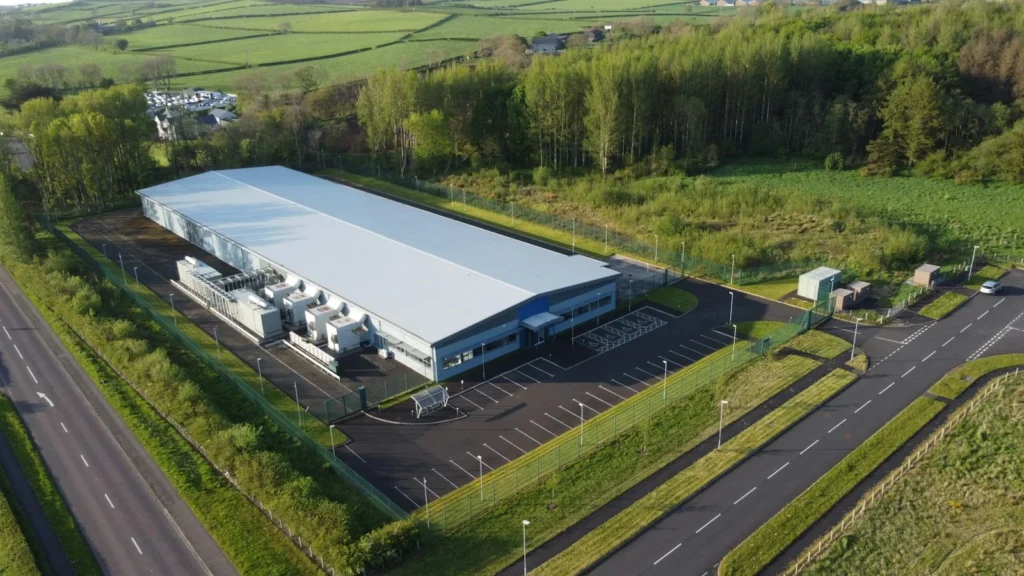
From the day it became law, construction or upgrading of new or existing AI data centers could not begin or continue. The bill defines an AI data center in two ways: a facility used to develop or run AI models at scale, or a facility with more than 20 megawatts of power capacity that either delivers at least 20 kilowatts to a single server rack or uses liquid cooling. That second test is aimed squarely at the dense GPU clusters used for AI training.
2. Conditions for lifting the pause
The moratorium would end only when Congress passes new laws that expressly terminate it. Those laws would have to:
- Require federal review and approval of AI products before release, to confirm they are safe and effective and do not threaten health, privacy or civil rights.
- Make sure the gains from AI and robotics reach workers, including policies against AI driven job losses.
- Require any future data center to avoid raising consumer utility bills, avoid harming the environment, give affected communities the power to approve or reject it, take no government subsidies and create union jobs with prevailing wages.
3. Export limits and reporting
The Commerce Department would have to block exports of AI computing hardware, such as advanced chips and servers, to countries without comparable safeguards. The Energy Department would publish quarterly reports on every AI data center, covering water and energy use, emissions, noise, jobs and wages, and any subsidies.
| Item | Status in October 2026 |
|---|---|
| Senate bill | S. 4214, introduced March 25, 2026 by Sen. Sanders |
| Committee | Commerce, Science, and Transportation, no hearing or markup recorded |
| Senate cosponsors | None listed |
| House version | Identical bill referred to Energy and Commerce and Foreign Affairs |
| Chance of passage | Low, with no committee action so far |
Why the bill appeared now
Data centers have become a local political issue across the country. Residents near proposed sites worry about electricity rates, water use, noise and land. In March 2026, major tech companies including Amazon, Google, Meta and Microsoft signed a voluntary pledge at the White House to cover the full cost of the power their data centers use, a sign that the industry knows the buildout has an image problem.
States have started acting on their own. Maine’s legislature passed the first statewide moratorium on large data centers in April 2026, but Governor Janet Mills vetoed it. In July 2026, New York Governor Kathy Hochul signed an executive order that holds state environmental permits for new or expanded data centers of 50 megawatts or more until a statewide environmental review is finished. The Sanders bill goes much further than any of these by tying a national freeze to broad AI regulation.
The arguments on both sides
What supporters say
- AI is being deployed faster than lawmakers can assess its risks, and pausing the infrastructure is one of the few levers Congress clearly controls.
- Households should not see higher power bills to support facilities they did not ask for.
- Communities deserve a real vote on projects that use large amounts of water and energy.
- Workers need protections before automation spreads further.
What critics say
- Industry groups, including the Data Center Coalition, argue a moratorium would cut high wage jobs and local tax revenue, limit internet capacity and raise costs for families and businesses.
- Many lawmakers in both parties see AI leadership as a national security priority and worry a freeze would hand ground to China.
- The conditions for ending the pause are so broad that the freeze could last indefinitely.
- Rules on bills, water and community consent could be handled through targeted laws without stopping all construction.
FAQ
Has the Sanders data center moratorium passed?
No. As of October 2026 the bill sits in the Senate Commerce Committee with no action since it was introduced in March.
Would the bill shut down existing data centers?
No. It would stop new construction and upgrades of AI data centers. Existing facilities could keep operating, but would face reporting requirements.
Does it cover every data center?
It targets AI data centers: facilities that develop or run AI at scale, or that exceed 20 megawatts and use high density racks or liquid cooling.
Who cosponsored it?
The Senate bill lists no cosponsors. Representative Alexandria Ocasio Cortez announced the bill alongside Sanders as his partner on the effort in the House.
The verdict
The Sanders bill is best read as a statement of principles rather than a law in waiting. It has almost no path through this Congress, but it captures real public concern about AI data centers, and state actions in Maine and New York show that some of those ideas are already shaping policy closer to home.
Updated October 2026: rewritten as an explainer on what the AI Data Center Moratorium Act would do, its congressional status and the arguments for and against it.
Featured photo: Geoffrey Moffett on Unsplash.
About this article: GeekBlog covers U.S. technology news, AI, phones, smartwatches and gaming. Every story is written and checked under our Editorial Policy. Spotted a mistake or have a story tip? Contact our editors.
