

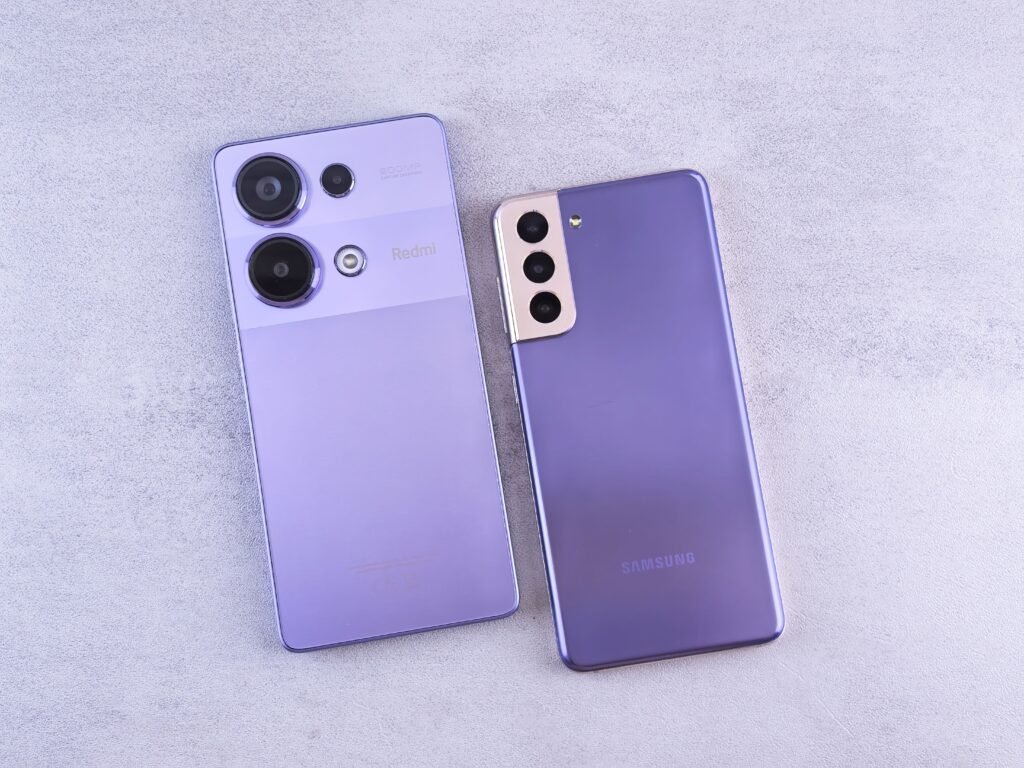
Apple spent Wednesday’s keynote explaining how hard it is to build a phone that folds. Samsung spent it live posting.
Within minutes of the iPhone Duo appearing on screen at Apple’s “Surprise and Shine” event, the Samsung Mobile US account on X started firing. The line that stuck, the one that has been screenshotted into every group chat since, was short enough to fit on a sticker.
“Let us know when you’re done reheating our leftovers.”Samsung Mobile US, posting on X during Apple’s keynote
It was not a one off. Samsung ran a whole set, including a callback to its own old jab at Apple, “let us know when it folds,” plus a “was there range? no. was it exciting? no. did it happen? yes” post tagged #ItsTimeToSwitch. The company has been waiting seven years to use these.
The short version
- Apple unveiled the iPhone Duo, its first foldable, on September 9 at $1,999
- Samsung responded on X with “let us know when you’re done reheating our leftovers”
- Samsung previewed its first foldable in 2018 and shipped the Galaxy Fold in September 2019
- That is a seven year gap between Samsung shipping and Apple shipping
- The Duo and the Galaxy Z Fold 8 land within $100 and 0.1 inches of each other
- Analysts expect Apple to take roughly a quarter of the foldable market in its first year
What Apple actually put on stage
Stripped of the trolling, the iPhone Duo is a book style foldable that opens to a 7.6 inch inner display and closes onto a 5.4 inch cover screen, which Apple says carries about 90 percent of the screen area of an iPhone 18 Pro. It runs the same A20 Pro silicon as the Pro phones, uses a dual battery layout to spread cells across both halves, and starts at $1,999 for 256GB, topping out at 2TB.
The one genuinely awkward compromise is biometrics. Face ID does not fit, so Touch ID comes back in the side button, a change we covered in detail when the list of features Apple quietly dropped from its foldable first started circulating. Pre-orders open Friday, October 16, with the phone on shelves Friday, October 23.
Apple’s pitch was mostly about the parts you cannot see. From the keynote:
“The central structural plane has support ribs for added stiffness. To make the frame even more rigid, the antenna splits are reinforced with high performance inserts. They’re made from ceramic fibers that are three times stronger than grade five titanium.”Apple, on the iPhone Duo hinge and frame
The seven year head start Samsung keeps pointing at
Samsung’s joke works because the timeline is genuinely lopsided. The company showed a folding prototype on stage in November 2018, shipped the first Galaxy Fold in September 2019, survived a famously rough launch when review units failed within days, and then iterated in public every year while Apple said nothing at all.
Who folded first
Dates reflect public announcements and retail availability.
That history is the entire joke. Samsung is not claiming the iPhone Duo is bad. It is claiming there is nothing in it that Samsung owners have not been living with since the last decade, which is a different and more annoying accusation.
How close the two phones actually are
Here is the uncomfortable part for both sides. Put the spec sheets next to each other and the two flagship foldables of 2026 are nearly the same object at nearly the same price.
| Spec | iPhone Duo | Galaxy Z Fold 8 |
|---|---|---|
| Starting price | $1,999 | $1,899 |
| Inner display | 7.6 inches | 7.6 inches |
| Cover display | 5.4 inches | 5.5 inches |
| Chip | A20 Pro | Snapdragon 8 Elite Gen 5 |
| Biometrics | Touch ID in the side button | Fingerprint plus face unlock |
| Storage ceiling | 2TB | 1TB |
| On sale | October 23, 2026 | August 2026 |
Samsung got there first and is $100 cheaper. Apple gets seven years of other people’s hinge failures for free. If you already own a Fold, the tips in our guide to getting more out of a Galaxy Z Fold still apply, because the software habits that make a big inner screen worth carrying have not changed just because Apple turned up.
Samsung has sold folding phones every year since 2019. Photo via Pexels.
Why Samsung is swinging so hard
Trolling is cheap. Market share is not. Counterpoint Research expects global foldable shipments to grow more than 20 percent this year, and expects Apple to walk in and take roughly 25 percent of that market in its very first attempt, with Samsung holding the top spot but no longer holding it comfortably.
Projected 2026 foldable market share
Counterpoint Research forecast for 2026. Remaining share is spread across smaller vendors.
A quarter of a category on day one is not the sort of number you shrug at, and it is the reason a corporate social account was allowed to spend an evening being mean on the internet. Apple does not need to build a better foldable than Samsung. It needs to build one that is good enough for people who were never going to leave iOS in the first place, and that is a much lower bar.
The reaction was not a clean win for anyone
Samsung’s posts went viral, but the replies split three ways. Some people thought Samsung had a point. Some thought it looked insecure. On Reddit, one comment summed up the second camp neatly: “Samsung mobile is like that annoying little brother that can’t help themselves but get annoyed by everything you do.”
Another reply cut the other direction: “Samsung’s whole schtick is to rush gimmicks to market and then claim that Apple is copying them.” And a third simply noted the obvious, that a competitor mocking an Apple launch is now as much a part of September as the launch itself.
Worth remembering
Samsung ran an almost identical campaign against the iPhone’s late arrival to big screens, wireless charging and high refresh rate displays. In each case Apple shipped years later, sold enormous numbers anyway, and the ads stopped.
What to actually watch
Two things will decide whether Samsung’s jokes age well. The first is durability. Apple’s ceramic fiber inserts and support ribs are a real engineering answer to the problem that nearly killed the original Galaxy Fold, and if Duo hinges survive a year of pockets without visible creases, the “leftovers” line becomes a compliment about who did the R&D.
The second is price pressure. A $1,999 iPhone gives every other manufacturer permission to charge more, something we flagged when Apple’s foldable price tag first started reshaping the category. Samsung undercutting Apple by $100 is not generosity, it is positioning, and it only holds if Apple stays at two grand.
Either way, the fun part is over quickly. Pre-orders open October 16, the phone ships October 23, and by November we will be reading teardown videos instead of tweets. Samsung got the better line. Apple gets the better sales quarter. Both of those things can be true at the same time.
