

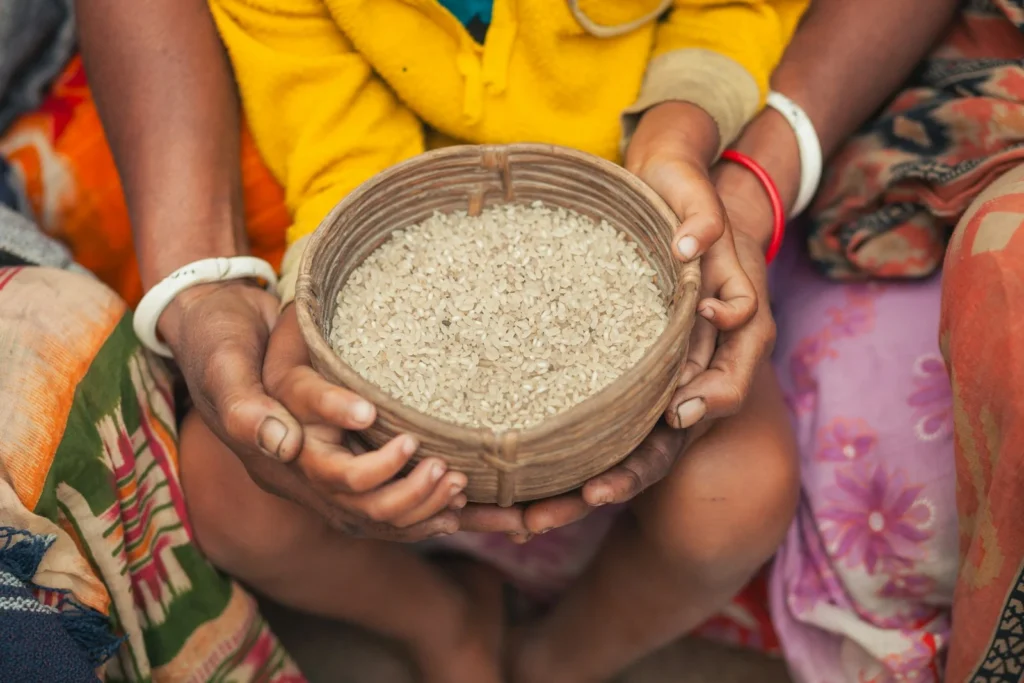
The small foil pouches handed to malnourished children in Gaza and other crises contain ready to use therapeutic food, or RUTF: a thick, sweet paste made mostly from peanuts, milk powder, oil and sugar, fortified with vitamins and minerals. Each pouch delivers a dense dose of calories and nutrients that a child can eat straight from the packet, with no cooking, water or refrigeration. Here is what is inside, who makes it, how it works and what UN agencies report about Gaza as of October 2026.
What is inside an RUTF pouch
According to UNICEF, the paste combines peanut paste, powdered milk, vegetable oils, sugar and a premix of vitamins and minerals. Each 92 gram sachet provides about 500 kilocalories. The recipe is designed to be energy dense, rich in protein and fat, and complete enough in micronutrients to rebuild a starving child’s body.
Energy, fat and plant protein in a small volume.
High quality dairy protein that supports growth and recovery.
Extra calories and a taste children accept.
A fortified premix to correct deficiencies.
Because the paste contains very little water, bacteria struggle to grow in it. That is the key advantage over older therapeutic milks, which had to be mixed with clean water, a serious problem in places where safe water is scarce.
Who makes it
The best known brand is Plumpy’Nut, made by the French company Nutriset, based in Malaunay in Normandy. Nutriset also licenses production to partners in other countries. In the US, the Rhode Island nonprofit Edesia produces Plumpy’Nut for humanitarian buyers.
UNICEF says it worked with more than 20 RUTF suppliers in 2025, located across Africa, the Americas, Asia and Europe. Local production in countries that face recurring hunger crises shortens supply chains and supports local economies, though quality standards are the same everywhere.
How UNICEF uses RUTF
UNICEF is by far the largest buyer, supplying nearly 80% of the world’s RUTF. It ships cartons of 150 sachets, which is typically enough for one child’s full course of treatment, and prepositions stock in warehouses close to crisis zones so it can move quickly when needs spike.
- Screening. Health workers measure a child’s middle upper arm circumference with a color coded tape and check for swelling in both feet.
- Triage. Children with severe acute malnutrition but a good appetite and no medical complications are treated as outpatients.
- Home treatment. Caregivers receive a supply of sachets and return regularly so staff can weigh the child and refill the ration.
- Discharge. Treatment usually lasts four to six weeks, depending on the child’s age and weight, until the child reaches recovery targets.
How it works medically
Severe acute malnutrition means a child is dangerously thin for their height or has nutritional swelling. Under World Health Organization guidance for children aged 6 to 59 months, a very small arm circumference, a very low weight for height or swelling in both feet signals the condition. These children have depleted fat and muscle, weakened immune systems and often missing vitamins and minerals.
RUTF supplies concentrated energy and protein so the body can rebuild tissue, along with the micronutrients needed to restart normal growth. Because it is eaten in small portions throughout the day, even a weak child can take in enough calories. Children with complications such as infection, poor appetite or severe swelling need hospital care first, where staff use therapeutic milks and treat the underlying illness before switching to RUTF.
The situation in Gaza
In August 2025 the Integrated Food Security Phase Classification (IPC), the system UN agencies and NGOs use to measure hunger, confirmed famine in Gaza Governorate. A ceasefire took effect on October 10, 2025, and by December 2025 the IPC reported that no area of the Strip was classified in famine, though needs remained extreme.
The most recent IPC analysis, published July 23, 2026, describes a further improvement. It credits large scale assistance and a major expansion of nutrition programs with reducing child acute malnutrition. All analyzed governorates were classified as Acceptable for acute malnutrition from mid April to June 2026, with a projected shift to Alert from July to December 2026. Rafah could not be analyzed because of insufficient data.
| IPC estimate (July 2026) | Figure |
|---|---|
| Children 6 to 59 months likely to need treatment, May 2026 to April 2027 | About 74,200 |
| Of those, severe cases | 11,432 |
| Pregnant and breastfeeding women expected to be acutely malnourished | About 24,600 |
| Population projected in Crisis or worse food insecurity, July to December 2026 | About 1.41 million (67%) |
| Population in Catastrophe (Phase 5) | None |
The IPC warns that the gains are fragile. It points to continued hostilities, volatile humanitarian access, declining and unpredictable funding, high prices for commercial goods and heavily damaged farmland. Aid remains the main food source for most households, and only about one in five young children gets an adequate diet.
FAQ
Is RUTF the same as peanut butter?
No. It is peanut based, but it adds milk powder, oil, sugar and a precise vitamin and mineral premix, and it is produced to strict therapeutic standards.
How many sachets does one child need?
UNICEF says a carton of 150 sachets is usually enough for a full course of four to six weeks.
Is there still famine in Gaza?
The IPC analysis published in July 2026 classified no part of the Strip in famine, but it still projects high food insecurity and tens of thousands of children needing treatment.
The verdict
RUTF is one of the simplest and most effective tools in humanitarian nutrition: a shelf stable paste that lets health workers treat starving children at home instead of in crowded wards. In Gaza, UN agencies report that it helped push malnutrition down after the ceasefire, but they stress that steady access and funding are needed to keep it that way.
Updated October 2026: rewritten as an explainer on RUTF, its makers and its medical use, with the latest IPC findings on Gaza.
Featured photo: Ian Taylor on Unsplash.
About this article: GeekBlog covers U.S. technology news, AI, phones, smartwatches and gaming. Every story is written and checked under our Editorial Policy. Spotted a mistake or have a story tip? Contact our editors.
