

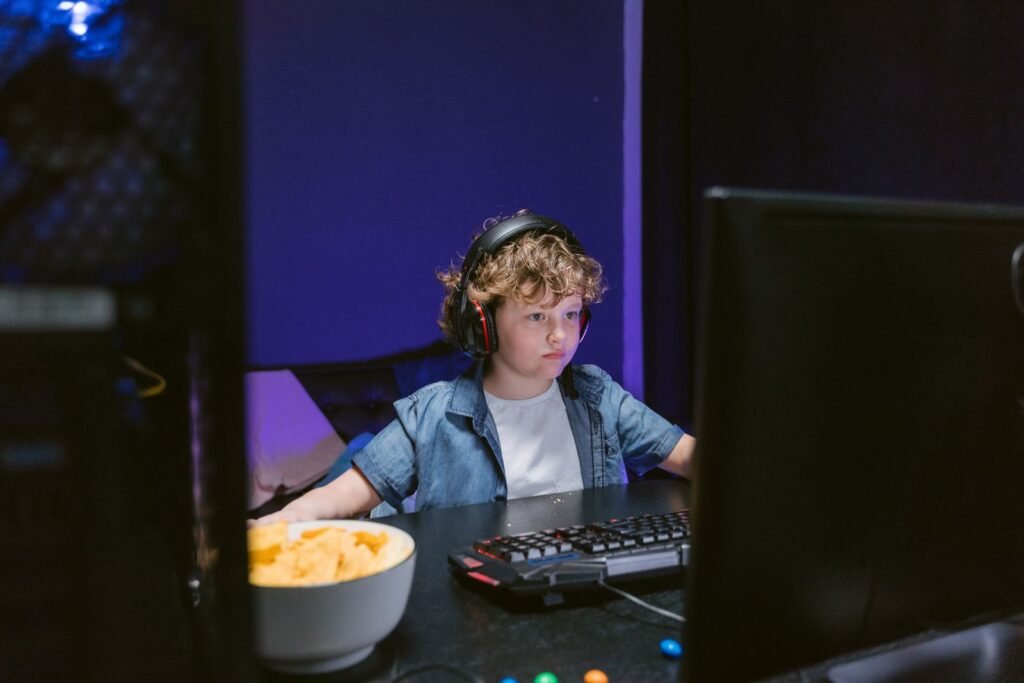
Lawsuits against game companies usually come with a number designed to hurt. This one comes with a number designed to embarrass. A father in Henan province is suing four of China’s largest studios for 10 yuan, about $1.50, and he has been perfectly clear that he does not want the money.
What the Filing Describes
The account data cited in the lawsuit covers roughly two and a half years and works out to about 2.44 hours a day on average, with sessions frequently running until three or four in the morning. Those are the numbers from a single account. The games in question are among the biggest titles in the world, including Honor of Kings, Genshin Impact, Marvel Rivals and Puzzles and Survival.
The health details are what turned this from a family problem into a court case. According to the filing, the teenager stopped eating properly and lost around 10 kilograms, roughly 22 pounds. A month before the suit was filed, they were hospitalized after ingesting 18 fever pills. Qin has not claimed to know exactly why that happened, saying he suspects it came from guilt or from dizziness after long sessions, and that it was the hospitalization that made him understand how serious the situation had become.
His stated aim is not compensation. “I hope the court can compel these companies to fulfil their responsibilities in preventing juvenile addiction,” he said. “I also hope the trial is held publicly to shine a light on the industry’s management weaknesses.”
Why 10 Yuan Is the Smartest Part of the Strategy
Ask for a large sum and the story becomes about the money. The companies settle quietly, a confidentiality clause goes on top, and nothing about the system changes. Ask for 10 yuan and there is nothing to settle. The only thing on the table is the question of whether the anti addiction systems work, argued in open court.
It also removes the most obvious line of attack. Nobody can credibly suggest a father is doing this for a payout worth less than a cup of coffee.
China Already Has the Strictest Rules in the World
This is the detail that makes the case genuinely interesting rather than just sad. China does not have a light touch regime that failed. It has the most restrictive one on the planet, and it still failed here.
| The rule for minors | What the filing describes |
|---|---|
| Online play allowed only between 8pm and 9pm on Fridays, Saturdays, Sundays and statutory holidays | Sessions running to 3am or 4am on a regular basis |
| Roughly three hours per week outside holidays | An average of about 2.44 hours per day |
| Accounts must be tied to verified real name identification | Account registered using an adult sister’s identity card |
| Facial recognition checks used to catch adult accounts played by minors | Qin argues the checks are not applied consistently enough to matter |
The loophole is not technical sophistication. It is a borrowed ID card, which is the oldest workaround there is. Tencent introduced a facial recognition system it called Midnight Patrol back in 2021 precisely to close this gap, prompting players who refused or failed the check to be treated as minors and kicked offline. Qin’s argument is essentially that these systems exist as announcements more than as enforcement, and that a determined teenager with a family member’s documents can play for two and a half years without ever triggering one.
The Companies in the Suit
| Company | Titles referenced | Why it matters |
|---|---|---|
| Tencent | Honor of Kings | The largest games company in the world by revenue |
| miHoYo | Genshin Impact | Built the modern template for daily login and gacha progression |
| NetEase | Marvel Rivals | Global live service hit with a heavy seasonal cadence |
| 37 Interactive Entertainment | Puzzles and Survival | Mobile strategy built around long term retention loops |
Naming four companies rather than one is deliberate. It reframes the complaint from a single bad actor to an industry design pattern, which is the argument Qin needs the court to accept if anything is going to change.
The Design Question Underneath
Every title in that table is built on retention. Daily rewards, streaks, limited time events, seasonal battle passes, progression that decays if you step away. None of that is illegal and none of it is unique to China. It is the default business model for live service games worldwide, including the ones Western studios are building right now while the industry waits on its biggest release in a decade.
The uncomfortable version of Qin’s claim is that the anti addiction systems and the engagement systems are made by the same companies, and only one of the two gets iterated on constantly. That is not a Chinese problem. It is the same tension that shows up whenever a platform is asked to police behavior its own metrics reward, which is why automated enforcement tools keep arriving on platforms with the people most affected doubting they will be applied where it costs the platform something.
What Happens Next
Realistically, the suit is unlikely to win damages, and Qin knows that. Chinese courts have generally held that companies complying with the regulator’s real name and time limit requirements have met their obligation. Proving that a company should have detected a borrowed identity is a much higher bar than proving it followed the published rules.
The leverage is elsewhere. A public trial in China involving Tencent, NetEase and miHoYo produces exactly the kind of attention that regulators respond to, and the regulator here has a long record of moving quickly once a topic becomes visible. Rules in this area have historically tightened after public pressure rather than after litigation.
There is also a wider context. Age verification requirements are spreading across the internet globally, from social platforms to app stores, and several jurisdictions are actively debating curfews for minors on social media. Gaming has largely stayed out of that conversation outside China. A well publicized case about a teenager who bypassed the strictest system in existence using a family member’s ID card is the sort of thing that pulls it in.
The Bottom Line
Qin summed up his position without much lawyerly softening. “Games have had a destructive impact on children of this generation,” he said. “If I do not advocate for my child’s rights, I would not deserve to be called a parent.”
You do not have to accept that framing to see why the case matters. China built the strongest guardrails any country has attempted, complete with curfews, real name registration and facial recognition, and a teenager with a borrowed ID card played through all of them for 1,868 hours. Whatever the court decides about the 10 yuan, that number is the finding worth arguing about.
About this article: GeekBlog covers U.S. technology news, AI, phones, smartwatches and gaming. Every story is written and checked under our Editorial Policy. Spotted a mistake or have a story tip? Contact our editors.
