

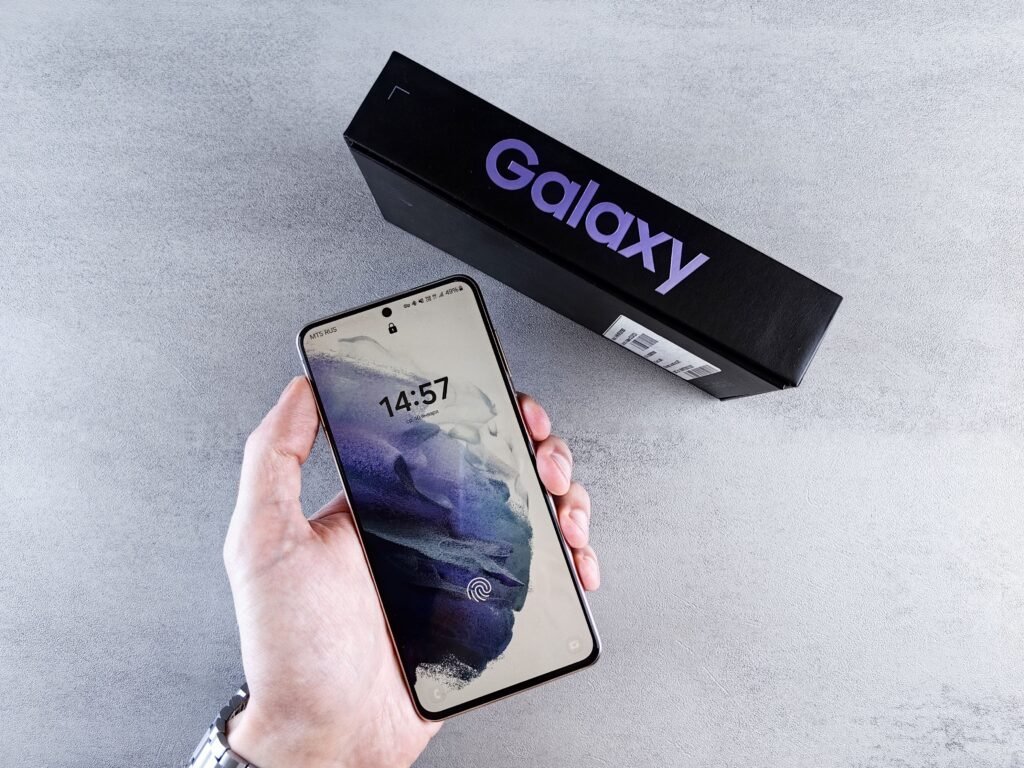
Phone prices go up at launch. That is the normal rhythm of this industry: a new flagship arrives, it costs more than the one it replaces, everybody complains for a week, and then the old model drifts down in price until it becomes the sensible buy. The whole thing is predictable enough that most people shopping for a phone know to wait.
Samsung just broke that rhythm. As of October 1, the Galaxy S26, S26+ and S26 Ultra cost more in the United States than they did on September 30. Not a promotional price ending, not a carrier deal expiring. The list prices went up, on phones that have been on sale since March, with no change to the hardware, the software or the box.
Raising the price of a product seven months into its life is close to unheard of in consumer electronics, where the entire pricing model assumes a slow slide downward. It happened because the components inside these phones have become dramatically more expensive since Samsung set those prices, and the company decided that eating the difference for another five months was worse than the headlines.
The new US prices, tier by tier
The increase is not uniform. Base storage tiers went up $100 across all three models, which is the figure most coverage has led with. The Ultra’s top tier went up twice that, and that is the more revealing number, because it tells you where the cost pressure actually sits.
| Model | Launch price | Price from Oct 1 | Change |
|---|---|---|---|
| Galaxy S26, 256GB | $899.99 | $999.99 | up $100 |
| Galaxy S26, 512GB | see note | $1,199.99 | increased |
| Galaxy S26+, 256GB | $1,099.99 | $1,199.99 | up $100 |
| Galaxy S26+, 512GB | see note | $1,399.99 | increased |
| Galaxy S26 Ultra, 256GB | $1,299.99 | $1,399.99 | up $100 |
| Galaxy S26 Ultra, 512GB | $1,499.99 | $1,599.99 | up $100 |
| Galaxy S26 Ultra, 1TB | $1,799.99 | $1,999.99 | up $200 |
A note on the two rows marked “see note”: Samsung’s current pricing for the 512GB versions of the S26 and S26+ is clear, but the original list prices for those specific tiers are not consistently documented across sources, so we are not going to invent a delta for them. The confirmed increases are the ones above.
Look at the Ultra column and the logic falls out immediately. The 256GB and 512GB versions went up by the same $100 as everything else. The 1TB version went up $200. The only thing separating those tiers is how much flash memory is soldered to the board, and the model with twice as much flash absorbed twice the increase. That is not a marketing decision dressed up as a cost decision. That is a cost decision.
Korea got the same bill on the same day
This was not a US-only adjustment. Samsung applied an increase of 149,600 won, roughly $111, across the Galaxy S26 line in its home market on October 1 as well. The Galaxy S26 moved from 1,254,000 won to 1,403,600 won, and the S26+ went from 1,452,000 won to 1,601,600 won. Reporting out of Korea put the Ultra’s increase as high as the equivalent of $200 on upper tiers, matching the US pattern.
The simultaneity matters. A price change in one market can be a currency story, a tariff story or a local tax story. The same increase landing in Korea and the United States on the same date, applied to the same product line, is a component cost story. Samsung is not repricing for a market. It is repricing for a bill of materials.
Why a phone can get more expensive after it ships
A flagship phone’s price is set months before it goes on sale, using component contracts negotiated even earlier. Samsung priced the Galaxy S26 using memory costs as they looked in late 2025. Those costs have since moved in a way nobody in the phone business planned for.
The cause is AI infrastructure. High bandwidth memory for accelerators and server class DRAM for data centers are made on the same lines, by the same handful of companies, as the LPDDR chips that go into phones. When the margins on data center parts are several times better, capacity moves there. Gartner’s figures for 2026 put DRAM prices up 125 percent for the year and NAND up 234 percent. Apple has reportedly accepted Samsung’s memory pricing for the first quarter of 2027 at 30 to 40 percent above third quarter 2026 levels.
Samsung is in the strange position of being both the victim and the beneficiary here, since Samsung Electronics makes memory as well as phones. The memory division is having an excellent year. The phone division is paying market rates for parts, and its margins are the ones that get squeezed when a flagship’s price was locked in before the squeeze started.
None of this is unique to Samsung. Apple added $100 to every iPhone this cycle and $300 to the 1TB models, for exactly the same reason and with the same storage-weighted pattern. Apple going first almost certainly made Samsung’s decision easier, because the competitive cost of raising prices drops sharply once the other premium option has already done it.
The pressure shows up in specifications too, not just prices. RAM allocations have gone flat or backwards across the industry this cycle, with phones that would normally have stepped up to more memory holding at last year’s figure instead. Paying more or getting less are the two available responses to the same problem, and manufacturers are using both.
The Galaxy S27 price leak is already yesterday’s news
Here is where it gets genuinely interesting. On September 30 and October 1, a wave of coverage reported a leak about Galaxy S27 pricing, sourced to the Korean tipster Lanzuk. The claim was that the S27 line would cost 100,000 to 130,000 won more than the S26, roughly $74 to $96, with a steeper increase on higher storage tiers. The leaked S27 Ultra figures circulated as $1,399 for 256GB, $1,599 or more for 512GB, and something near or above $2,000 for 1TB.
Compare those numbers to the table at the top of this article. They are not predictions about a phone launching in early 2027. They are, to the dollar, the prices Samsung started charging for the Galaxy S26 Ultra today.
The leak carries one detail that is genuinely about the S27 and not about today: LPDDR6 memory is reportedly reserved for the Pro and Ultra models only. That is a meaningful split, because it means the cheaper S27 models stay on LPDDR5X while the expensive ones absorb the cost of a new and more expensive memory generation. It also lines up with the broader pattern of Samsung reorganizing the top of the lineup, including the reported decision to cut the S27 Ultra to three rear cameras.
Worth repeating the usual caution: Samsung has not finalized S27 pricing, the leaked won figures are specific to South Korea, and the series is not expected until early 2027. A lot can move between now and then, and given the direction memory prices are heading, not much of it is likely to move downward.
What this means if you are shopping right now
The ordinary advice in October would be to wait, because flagship prices fall as the next generation approaches. That advice is now inverted, and it is worth being blunt about it.
| If you are | What to do |
|---|---|
| Buying an S26 in the next few weeks | Check third party retailers and carriers before Samsung’s own store. Existing stock bought at old wholesale prices does not instantly reprice, and that gap is where the deals are. |
| Weighing 256GB against 512GB | Decide now rather than later. Storage upgrades are the tier absorbing the most cost, and the gap between tiers is more likely to widen than narrow. |
| Planning to wait for the S27 | Budget from today’s prices, not March’s. Waiting for the next generation has historically meant waiting for a discount on this one. That assumption no longer holds. |
| Happy with your current phone | Keep it. This is a bad cycle to buy into, and a phone you already own is immune to memory pricing. |
There is one more thing worth watching, and it is the part nobody can answer yet: whether this becomes normal. A mid-cycle increase was previously unthinkable because it punishes the customers who waited, which is a reputational cost most companies will not pay. Samsung paid it. If memory stays expensive through 2027, as Samsung itself has suggested, the question is not whether other manufacturers follow but how quickly.
Frequently asked questions
Did the Galaxy S26 change in any way?
No. Same chip, same cameras, same displays, same software, same box. The only thing that changed is the number on the price tag.
How much did each model go up?
Base 256GB models went up $100 across the S26, S26+ and S26 Ultra. The S26 Ultra’s 512GB model also went up $100, and its 1TB model went up $200, from $1,799.99 to $1,999.99.
Is this only in the United States?
No. South Korea received an increase of 149,600 won, about $111, on the same date. Other markets have reported increases as well, including the United Arab Emirates.
Why did the 1TB Ultra go up twice as much?
Because the difference between tiers is flash memory, and NAND flash is the component whose price has risen most sharply. Gartner’s 2026 projection has NAND up 234 percent for the year, against 125 percent for DRAM. The model carrying the most flash absorbed the most cost.
Will the Galaxy S27 cost $1,399?
That figure comes from a leak, and it is identical to what the S26 Ultra costs as of today, which suggests it describes the new baseline rather than the S27’s eventual price. If the S27 adds the reported 100,000 to 130,000 won on top of current prices, the Ultra would start noticeably higher than $1,399. Samsung has not finalized anything.
Can I still find the old prices anywhere?
Possibly, for a while. Retailers and carriers holding inventory purchased under earlier terms do not necessarily reprice the moment a manufacturer does. That window closes as stock turns over.
Is this likely to happen again?
Samsung has said 2027 memory supply could be tighter than 2026, and the three largest memory makers are reported to be fully booked into 2027. Nothing about the underlying situation suggests relief is close.
The bottom line
Samsung raised the price of a phone that has been on sale for seven months, in two major markets on the same day, without changing the phone. That is the story, and the reason it matters is not the $100 itself. It is what the move says about how little room manufacturers have left.
The storage-weighted pattern is the tell. A company inventing a reason to charge more would raise prices evenly. A company responding to a bill of materials raises them in proportion to the component that got expensive, which is exactly what happened here: $100 on everything, $200 on the model with a terabyte of flash in it. Apple did the same thing earlier this cycle with the same shape.
For buyers, the practical takeaway is that the usual timing strategy has stopped working. Waiting used to be free. In a year when the parts inside a finished phone keep getting more expensive, waiting has a price, and Samsung just told everyone what it is.
Sources and further reading
- Sammy Fans: Samsung increased Galaxy S26 series prices in the US, here are the new rates
- Sammy Fans: Samsung raised Galaxy S26 Ultra prices by up to $200 in Korea
- PhoneArena: Samsung has officially increased the US Galaxy S26, S26 Plus and S26 Ultra prices
- SamMobile: Samsung confirms the Galaxy S26 Ultra price starts at $1,299
- PhoneArena: Galaxy S27 series price leak is here, and it is worse than expected
- 9to5Google: Galaxy S27 pricing may not only increase, but cost more to upgrade storage
- IDC: Global memory shortage crisis and its potential impact on smartphones and PCs in 2026
- Avnet: Riding the AI supercycle, navigating the 2026 memory and storage market
