

The sentence doing the rounds this week is that Utah has become the first state in the country to let an artificial intelligence examine patients and write them prescriptions, with no doctor involved. Half of that is true. The half that is not true happens to be the half carrying all of the alarm.
What Utah actually signed is a 12-month regulatory agreement with a company called Nolla Health, and the document is considerably more cautious than the coverage of it. It is also more interesting, because the conditions attached are the clearest public answer anyone has yet given to a question the whole industry has been circling: what would it take to let a model prescribe?
What the agreement actually permits
- Who: adults aged 18 and over who live in Utah. Nobody else
- What for: mild to moderate acne only. Topical creams and gels, reportedly eight approved treatments
- Explicitly excluded: severe acne, any oral medication, and isotretinoin
- Oversight: a physician signs off on every one of the first 100 prescriptions before it reaches a pharmacy
- Duration: 12 months, and every move to a looser stage needs written state approval
- Cost: around $5 a month for the app, with compounded medication at roughly $50
How the process works from the patient side
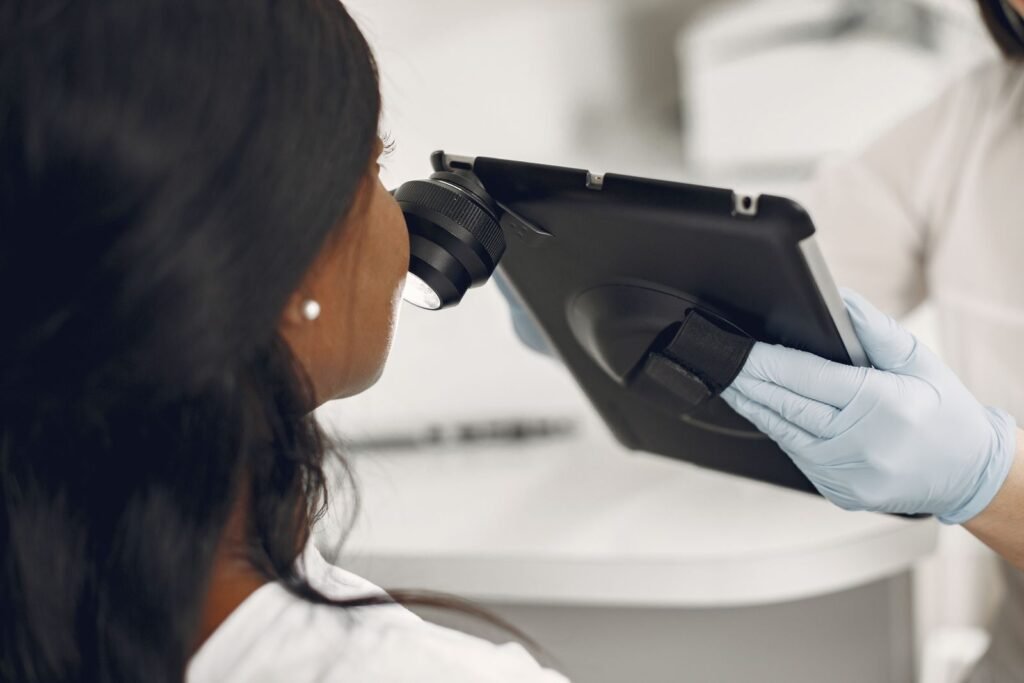
The flow is deliberately narrow, and the narrowness is the safety feature. A patient verifies their identity, gives informed consent, and answers a short structured intake questionnaire. Then they take a face scan from five angles.
From there the system does not write anything in the way a person writes a note. It selects from a set of pre-approved topical treatment plans using the structured clinical inputs plus its assessment of the scan. There is no free text box anywhere in the prescribing path. That one detail matters more than almost anything else in the design, because a model that can only pick from a fixed menu cannot invent a drug, a dose or an indication. It can only choose the wrong item from a short list, which is a far smaller failure surface.
Nolla describes its own role in modest terms. The company says the AI helps organise symptoms and health history, analyse skin scans, track changes over time and prepare information for clinician review. Read carefully, that is a description of a triage and documentation tool that happens to be allowed to pull the trigger on a narrow class of prescription.
The oversight schedule is the story
This is the part that almost every summary has flattened into “no human oversight”, and it is worth laying out properly, because the agreement does not describe one arrangement. It describes three, in sequence, each one looser than the last.
So the honest framing is not “AI prescribing without a doctor”. It is a supervised rollout that becomes progressively less supervised as it accumulates a track record, with the state holding a veto at each step and a hard expiry date on the whole thing.
Whether you find that reassuring probably depends on how you feel about stage three. Auditing one prescription in ten, after the fact, is a meaningfully different safety regime from checking every one. It is also, worth saying, not wildly out of line with how a lot of human medicine already gets quality-controlled.
What the pilot actually requires of the company
The obligations attached are the part most worth paying attention to, because they are the template other states will copy or reject.
| Requirement | What it means in practice |
|---|---|
| 24-hour adverse event reporting | Any harm has to reach the state within a day, not in a quarterly summary. That is a tight clock for a startup |
| AI versus clinician comparison | Nolla has to record where the model and a doctor would have disagreed. This is the dataset that will actually decide whether this works |
| Malpractice insurance for AI decisions | Someone has to be financially liable when a model gets it wrong. Insurers pricing that risk is quietly the biggest hurdle in the whole field |
| Board-appointed overseeing physician | The reviewer is appointed through the state board rather than chosen by the company |
| A clinician’s name on every script | Legally tidy, practically odd. A named human appears on prescriptions they did not personally write |
| 12-month expiry | This is not an approval. It is a time-limited experiment that lapses unless it is renewed |
That third row deserves more attention than it has had. Malpractice cover specifically written to pay out on AI-generated prescriptions is a genuinely novel insurance product. If underwriters are willing to price it for topical acne cream, the next conversation is about what premium they want for something that can hurt you, and the answer to that will shape this industry more than any regulator will.
Why acne, and why it is a clever choice
Starting with mild acne looks almost comically cautious, and that is precisely the point. The company is not being modest, it is being strategic, and the risk profile explains why.
Topical acne treatment is about as forgiving as prescribing gets. The worst common outcome of picking the wrong cream is dryness, irritation or a few wasted weeks. Nothing on the approved list interacts dangerously with other drugs, and nothing requires blood monitoring. Compare that with isotretinoin, which is explicitly excluded and which carries pregnancy-category warnings severe enough that human prescribers work inside a mandatory registry.
Note the age floor too. Acne peaks in adolescence, so restricting the pilot to adults rules out the single largest patient population while also avoiding the consent and safeguarding complications of minors sending facial photographs to a company for algorithmic assessment.
If you wanted to design the lowest-stakes possible venue for establishing the legal precedent that a model may prescribe, this is roughly what you would draw up. The precedent is the prize. The acne cream is the vehicle.
The reaction, and the part of it that is fair
Online response has been predictably blunt. On Reddit, one commenter wrote that “AI operating without humans to make medical decisions is not a good thing in any universe.” Another offered the shorter version: “This sounds terrifying.”
Both reactions are responding to a description of the pilot that overstates what it does. But there is a real objection buried underneath, and it is not about acne at all. It is about the direction of travel. Every stage in this agreement moves in one direction, towards less human review, and the only thing standing between stage three and stage four is whether a regulator later decides that the numbers look fine.
Utah has also been here before. The state ran an earlier pilot with a company called Doctronic covering prescription refills, and that one drew objections from the medical board over how consultations and oversight were handled. This is a jurisdiction that has decided to be the place where these experiments happen, which means it is also the place where the failures will happen first.
A claim worth holding at arm’s length. The evidence that these treatments are low-risk comes from Nolla. The company says possible effects are limited to things like localised irritation and dryness. That is the company’s own assessment of its own product, not a finding produced by the pilot, and the pilot is the thing that was supposed to generate independent evidence. Twelve months from now there should be real data. Right now there is a prospectus.
Where your face scan goes
The clinical questions have crowded out the data questions, which is a shame, because a service built on facial photographs of medical conditions is collecting about as sensitive a dataset as exists. Five angles of your face, tied to a verified identity, a health history and a prescription record.
Inside a conventional clinical relationship that sits under health privacy law. The thing to watch with any consumer health app is the boundary, because protections tend to follow the institution rather than the data. We have seen this exact seam before: when ChatGPT gained the ability to read medical records from Epic, the information stopped being covered by HIPAA the moment it crossed over. The legal status of a medical fact can change simply by moving between two companies, and almost nobody reads far enough into the terms to notice when it does.
The wider context it lands in
This arrives in a month when the loudest voices in AI have been arguing for restraint rather than speed. Anthropic’s Dario Amodei has publicly urged the industry to slow down. There is a thriving and increasingly well-funded ecosystem of campaigners making the case that AI risk is being underpriced, and a regulatory climate in which a great deal of what gets announced never ships.
Against that backdrop, what makes the Utah agreement notable is its sheer ordinariness. No new federal framework, no congressional hearing. A state agency, a startup, a staged rollout and an insurance requirement. This is how the boundary actually moves, in narrow bilateral agreements over low-stakes conditions, rather than in the sweeping legislation everyone keeps waiting for.
It is also a useful corrective to the way consumer health technology usually overclaims. The pattern in this sector is a bold capability announcement followed by years of quiet caveats, which is more or less the story of non-invasive glucose monitoring on wearables, a feature repeatedly promised and still not actually delivered. Nolla has done the reverse. It has claimed something small and gone and got written permission for it.
What to watch next
- The stage transitions. Whether Utah actually signs off on stage two and stage three, and what it asks for before doing so, tells you how this regime works in practice
- The disagreement data. The requirement to compare AI decisions against physician judgement should produce the first real public numbers on model accuracy in a prescribing role
- Whether other states copy the structure. The staged-oversight template is portable. If a second state adopts it, it becomes a de facto standard
- Scope creep. The interesting question is not acne. It is which condition gets added once a year of clean data exists
- What the insurers charge. Premiums on AI malpractice cover will be the most honest risk assessment anyone publishes
The bottom line
Utah has not handed medicine over to a machine. It has signed a tightly scoped, time-limited, heavily conditioned experiment in which an AI may select from eight acne creams for consenting adults, under human review that starts at one hundred percent and tapers from there, with a named physician and an insurance policy standing behind every decision.
That is a much less dramatic story than the one circulating, and a much more consequential one. Nobody in this field was ever going to get permission to prescribe by asking for it in general terms. They were going to get it by asking for something so small that saying no looked unreasonable, and then building on the precedent. That is what happened here, and it worked.
Sources and further reading
- Cybernews: AI acne prescriptions in Utah begin with human oversight
- Nolla Health’s own announcement of the Utah pilot
- Detail on the staged oversight terms of the regulatory agreement
- Runtime Wire: Utah authorizes Nolla’s AI to prescribe topical acne treatments
- Tech Times on the face-scanning intake process and how approval was granted
- Daily Caller: AI gets a green light to prescribe drugs in one state
- UNILAD Tech: Utah to become the first state to let AI examine patients and prescribe acne medication
About this article: GeekBlog covers U.S. technology news, AI, phones, smartwatches and gaming. Every story is written and checked under our Editorial Policy. Spotted a mistake or have a story tip? Contact our editors.
