

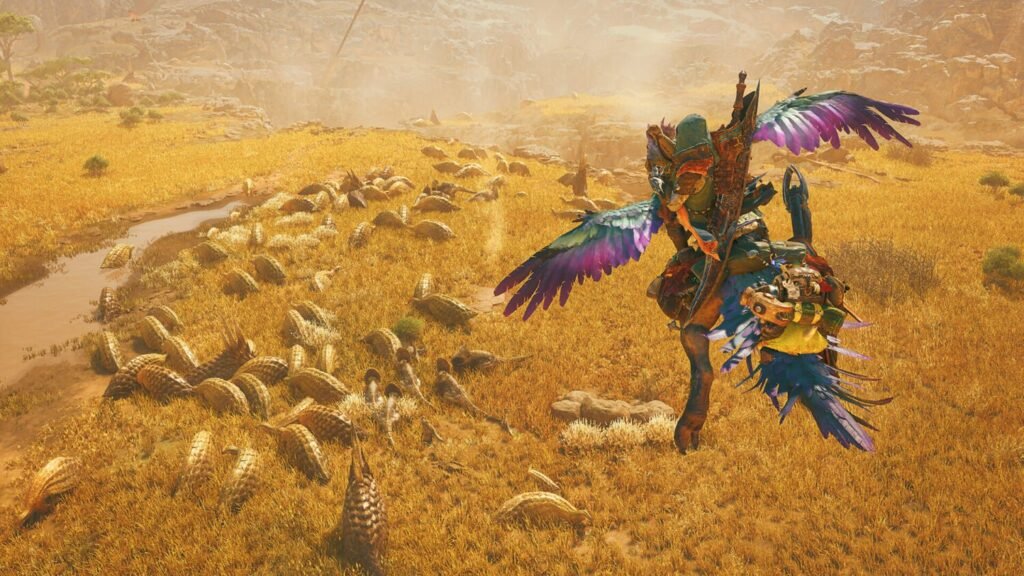
Featured image: official screenshot via Steam / Capcom
Capcom has spent the better part of two years hearing the same complaint from two opposite directions at once. Monster Hunter Wilds launched in February 2025 tuned to be the friendliest entry the series has ever had, and newcomers loved it. Veterans did not, and they said so loudly enough that Capcom spent the following year quietly making the game harder, patch by patch. Now, with the Ascendance expansion in development for a 2027 release, the studio says it has the opposite problem on its hands.
Speaking with press at Tokyo Game Show 2026, Ascendance director Takuro Hiraoka said Capcom is retuning the expansion’s endgame difficulty because the hunters who stuck around turned out to be sharper than anyone on the development team expected. “The player base was so good and so skilled,” Hiraoka said. “We had a bit of a gap in expectations. Maybe players got better than we expected in the intervening years.” It is a rare admission from a director: the team did not misjudge how hard the game should be in the abstract, it misjudged the players.
The short version
- What it is: Monster Hunter Wilds: Ascendance, a paid Master Rank expansion for Monster Hunter Wilds
- Director: Takuro Hiraoka, a Monster Hunter veteran who also worked on Capcom’s Exoprimal
- Release window: 2027 on PlayStation 5, Xbox Series X and S, and PC via Steam, with a Switch 2 release expected alongside it
- How you get in: reach Hunter Rank 40 and clear the “Awakening From a Dream” quest to start the Ascendance story and unlock Master Rank
- New locale: the Skybound Eyrie, a floating ruin above Wyveria’s cloud layer
- New threat: the Elder Dragon Lao-Shan Lung, a series veteran going back to the original Monster Hunter, ambushes the Forbidden Lands Expedition Team
- New tool: the Boost Bracer, a gauge-based piece of equipment that grants temporary combo and mobility options
- The headline change: Capcom is retuning endgame difficulty standards after players proved more skilled than the base game’s design anticipated
What Hiraoka actually told Tokyo Game Show
Hiraoka’s comments were careful to separate two different problems that outsiders tend to lump together. The base game’s difficulty, he explained, was deliberately built around not driving away new players who had never picked up a Monster Hunter game before. That decision worked, in the sense that Wilds became the fastest-selling release in Capcom’s history. It also meant that longtime fans blew through the story and early endgame without much resistance, and plenty of them said so on release weekend.
Ascendance’s endgame is a different design problem, and Hiraoka says the team’s original pass at it undershot what the current player base can actually handle. Rather than simply cranking up monster health and attack numbers, the studio is rewriting behavior. Every returning monster in Ascendance, not just the new ones, is getting new moves and attack patterns specifically so that veteran hunters cannot rely on muscle memory from the base game. The goal, in Hiraoka’s framing, is to make players “rethink” fights they think they already know cold.
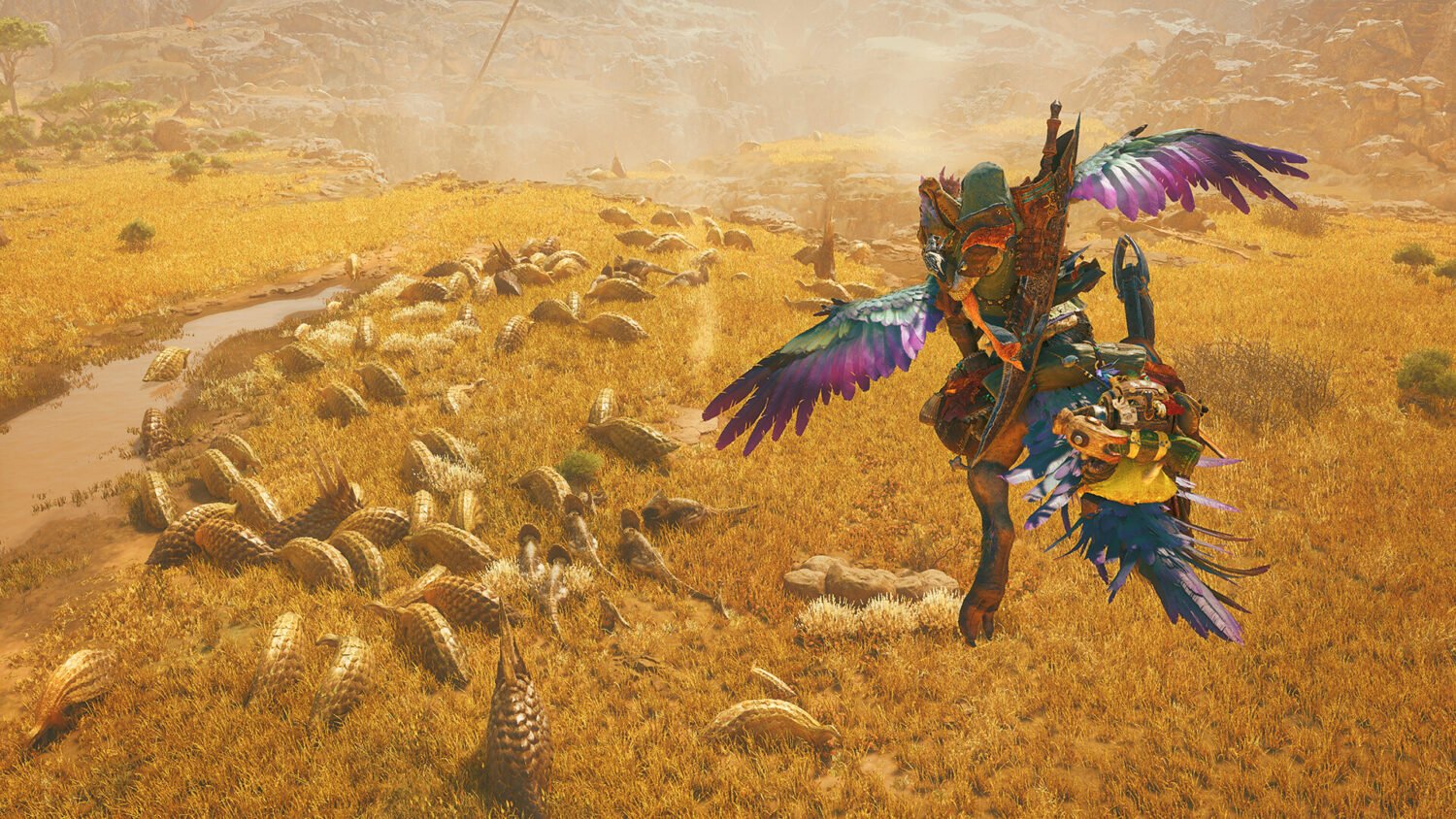
The other headline addition is the Boost Bracer, a new piece of equipment built around a gauge that fills as players fight and can be spent on short, powerful bursts of combo and mobility options. Hiraoka was explicit that this is not meant to turn every hunter into a nonstop damage machine. “The player hasn’t become this hyperaggressive, constant demon mode type of presence,” he said, describing it instead as another tool in the box whose timing is left for players to figure out for themselves.
The whiplash didn’t start with Ascendance
None of this is happening in a vacuum. Monster Hunter Wilds sold roughly 8 million copies in its first three days, the fastest launch pace of any game Capcom has ever released, and crossed 10 million within a month. That is the commercial success story. The other half of the story is that sales slowed hard after that opening burst, with Capcom’s own fiscal year reporting showing only a fraction of that pace sustained across the following twelve months, and the game did not reach 11 million units until roughly eleven months after launch.
| Milestone | Timing | What it signals |
|---|---|---|
| 8 million units sold | First 3 days | Fastest-selling release in Capcom’s history |
| 10 million units sold | First month | Momentum still tracking close to Monster Hunter: World’s pace |
| Difficulty patches begin | Weeks after launch, ongoing | Capcom raises monster damage and HP repeatedly in response to veteran feedback |
| 11 million units sold | Roughly 11 months post-launch | Growth pace slows sharply compared to the opening weeks |
| Tokyo Game Show 2026 | September 2026 | Hiraoka confirms Ascendance’s endgame is being retuned around player skill |
Capcom’s own leadership has already been publicly candid about the first half of that whiplash. At the PlayStation Partner Awards in late 2025, Wilds director Yuga Tokuda and producer Ryozo Tsujimoto struck an apologetic note about the base game, acknowledging what Tokuda called “the inconvenience caused by the volume of content and the low difficulty level.” Tokuda went further, directly asking lapsed veterans to give the game another look: “If you beat the game immediately after its release and stopped playing, I would appreciate it if you could pick it up again.” Wilds still walked away from that event with the Grand Award and the User’s Choice Award, so the apology clearly was not the whole story.
It has not been a clean fix since then, either. A more recent update expanding endgame quests split the community again, this time over new nine-star quests and a talisman reward system that some players felt was too stingy, with complaints about hunters “carting left and right” on the new content. Capcom is effectively trying to satisfy hardcore players demanding a real wall and newcomers who came in on the promise of an approachable game, in patch after patch, and Ascendance is where that tension gets resolved one way or the other.
What Ascendance is actually building on top of that
Strip away the difficulty conversation and Ascendance is still a fairly substantial expansion on its own terms. The story picks up after the Forbidden Lands Expedition Team is ambushed by Lao-Shan Lung, an Elder Dragon that goes all the way back to the very first Monster Hunter game and has not had a proper starring role in years. That ambush is tied to the mists over Wyveria finally clearing, revealing the Skybound Eyrie: a new region floating above the cloud layer, built around ancient ruins and endemic life nobody in the story has documented before.
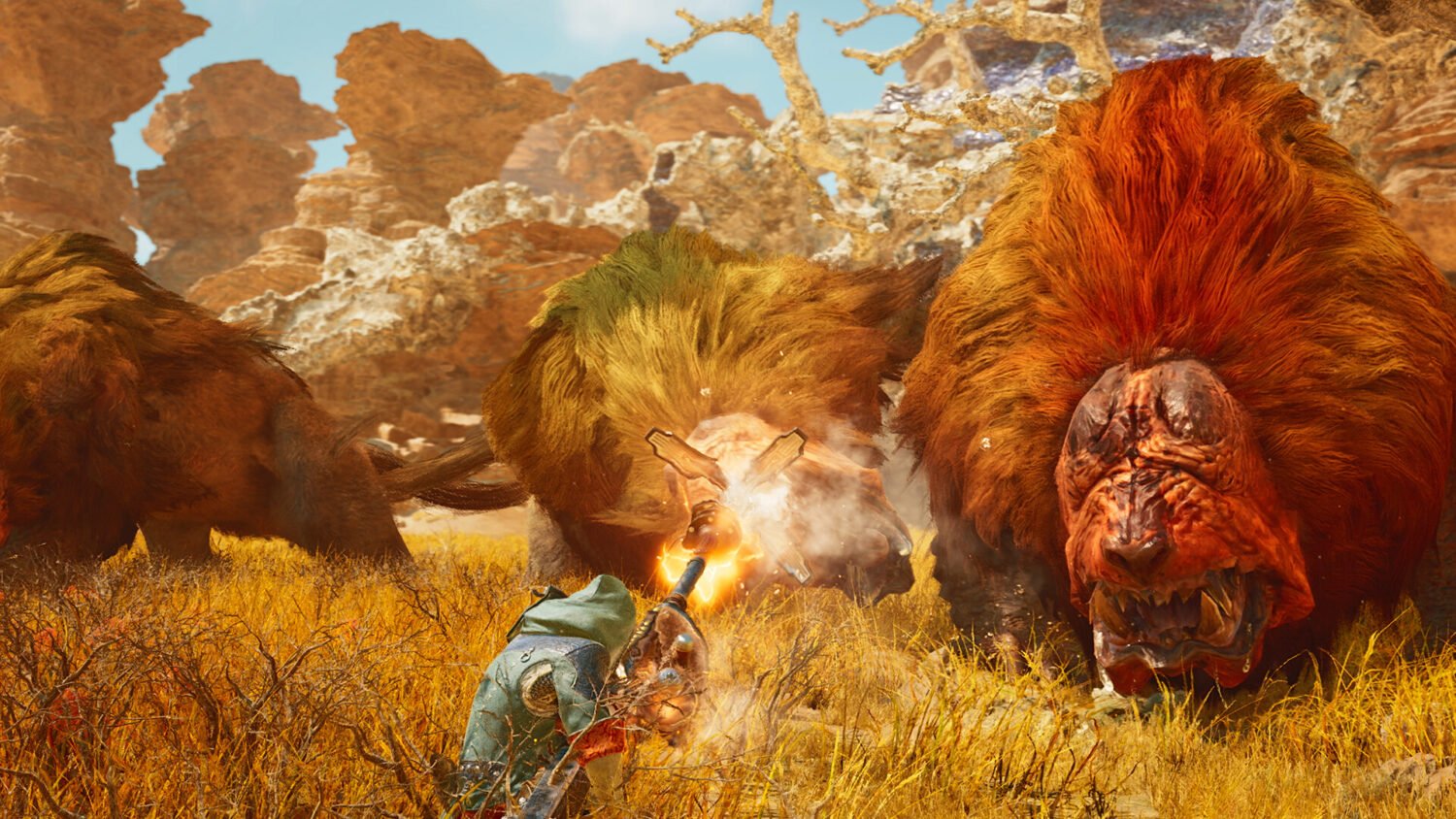
Getting there requires progress, not just a purchase. Players need to reach Hunter Rank 40 in the base game and complete a quest called “Awakening From a Dream” before the Ascendance story opens up and Master Rank becomes available, which keeps the expansion gated behind a meaningful chunk of the original campaign rather than letting new buyers skip straight to the hard content. Combined with the Boost Bracer and the reworked monster movesets, the pitch is less “harder numbers” and more “the game you thought you had memorized now behaves differently.”
Capcom is not the only studio publicly wrestling with how to pace an endgame this year. Blizzard used its own showcase to reveal Diablo 5, a game explicitly built around surviving an apocalypse rather than stopping one, which is its own bet on what keeps a loot-and-grind endgame compelling once the credits roll. Ascendance’s approach, leaning on new behavior over bigger numbers, is a notably different answer to the same underlying question of what a satisfying endgame actually needs.
It also lands in the middle of an unusually strong year for Capcom specifically. The publisher spent September earning IGN’s first-ever perfect score for the Onimusha series with Way of the Sword, and just a few weeks before that, the studio was restoring more than a thousand cut voice lines to Resident Evil 4 and Requiem. A Monster Hunter expansion that actually listens to its endgame critics would fit neatly into that streak.
Should lapsed hunters actually come back for this
Nothing here is enough to promise Ascendance will land its difficulty curve correctly on the first try. Capcom has now spent close to two years adjusting Wilds in both directions, easing new players in at launch and then hardening endgame content afterward, and the community reaction to those changes has been mixed every single time. What is different this time is that the retuning is happening before launch, based on nearly two years of real player data, rather than as a scramble after a disappointed community shows up on social media.
Capcom has not announced a release date, price, or platform-specific edition details for Ascendance beyond confirming 2027 and the PS5, Xbox Series X and S, PC, and expected Switch 2 lineup. For players who dropped Wilds after finding the base game too easy, Hiraoka’s comments are at least a direct acknowledgment of the exact complaint they had, aimed specifically at the part of the game they never got to see: the fights meant to test them once they already knew what they were doing.
Bottom line
Monster Hunter Wilds: Ascendance is being built around a problem most studios would be glad to have: its own players got too good, too fast. Director Takuro Hiraoka says Capcom is redesigning Master Rank encounters around that skill growth rather than just inflating monster stats, on top of a genuinely new locale, a returning Elder Dragon, and a new piece of equipment in the Boost Bracer. No date or price yet, only a 2027 window, but for veterans who bounced off the base game’s early difficulty, this is Capcom saying it heard them, aimed at the one part of Wilds they never stuck around to see.
