

The smart ring has gone from novelty to genuine rival, and in 2026 the most common question among health-conscious shoppers is no longer which smartwatch to buy, but whether to skip the watch entirely and wear a ring instead. The Oura Ring 4 is the device that made smart rings mainstream, and the Apple Watch Series 11 is still the benchmark wearable. They overlap in what they track, yet they feel completely different to live with.
If you are trying to decide between a screen on your wrist and a sensor on your finger, the right choice comes down to how you want to use the data and how much you want to interact with it. Here is the full picture.
Quick Answer
Buy the Apple Watch Series 11 (from $399) if you want an all-in-one device for workouts, notifications, payments and safety, with no mandatory subscription. Buy the Oura Ring 4 (from $349, plus a $5.99/month membership) if your priorities are sleep, recovery and all-day comfort, and you would rather not charge a screen every night. The watch is the better athlete and communicator; the ring is the better sleep and recovery tracker that disappears on your finger.
Form factor changes everything
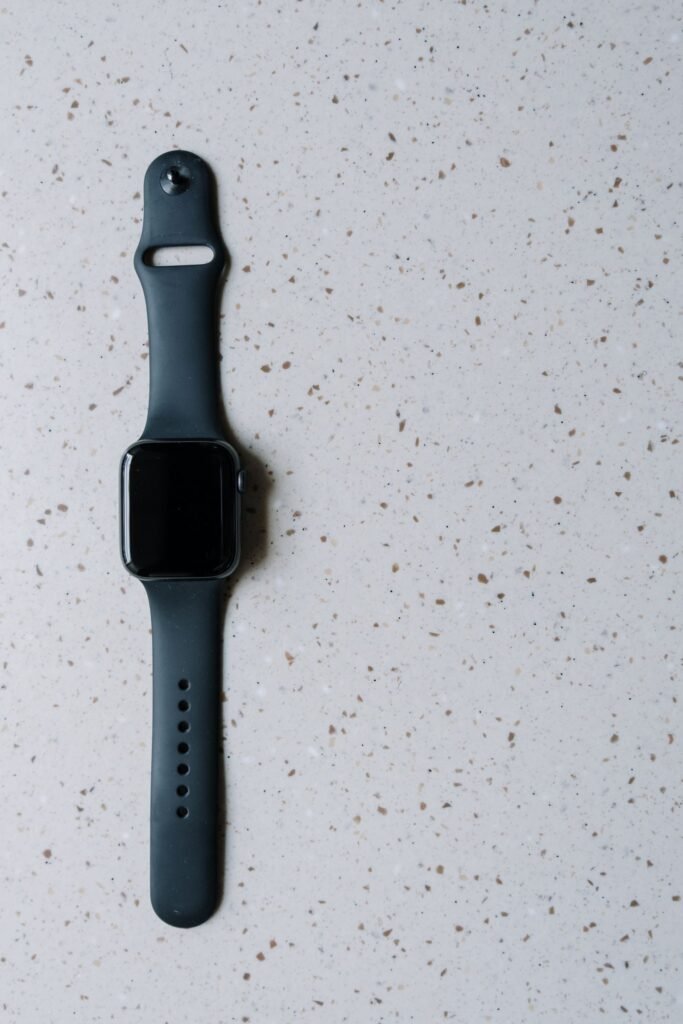
The Apple Watch is a small computer you wear. The Series 11, starting at around $399 for the 42mm model and $429 for the 46mm size, has an always-on display, runs apps, takes calls, handles Apple Pay, shows notifications and starts workouts with a tap. It also added 5G connectivity and a more scratch-resistant display this generation. It is active and visible. You interact with it dozens of times a day.
The Oura Ring 4 is the opposite of attention-grabbing. It is a fully titanium band you wear on a finger, with no screen and no notifications. All the sensors that measure heart rate, temperature, movement and blood oxygen are recessed inside the ring, and everything is read back through the Oura app on your phone. Many people forget they are wearing it, which is precisely the point. For sleep tracking in particular, a lightweight ring is far more comfortable than a watch pressing against the wrist all night.
Apple Watch vs Oura Ring 4: the specs side by side
Before we dig into each category, here is how the two devices compare on the numbers that matter most in 2026.
| Feature | Apple Watch Series 11 | Oura Ring 4 |
|---|---|---|
| Starting price | From ~$399 (42mm) / $429 (46mm) | From ~$349, up to ~$499 for premium finishes |
| Subscription | None required for core features | Oura Membership ~$5.99/mo or ~$69.99/yr (first month free) |
| Battery life | ~24 hours (up to 38 in Low Power Mode) | ~5–8 days per charge |
| Form factor | Always-on touchscreen smartwatch | Screenless titanium ring, sizes 4–15 |
| Sleep tracking | Sleep stages and Sleep Score; needs a charging window | Detailed stages, Readiness score; a sleep specialist |
| Standout metrics | GPS, ECG, hypertension notifications, fall/crash detection | Readiness, HRV, body temperature, cycle and stress insights |
| On-device display | Yes – time, alerts, live metrics, apps | No – all data lives in the phone app |
| Best for | Active exercisers who want one do-everything gadget | Sleep and recovery optimizers who want tracking to disappear |
What each one tracks best
Both devices cover the core health metrics: heart rate, heart rate variability, sleep stages, activity and blood oxygen. But each has a clear specialty.
The Apple Watch is the stronger device for active fitness and safety. It has built-in GPS for accurate run and ride mapping, on-demand ECG, the new notifications for signs of chronic high blood pressure (hypertension) introduced with the Series 11, fall detection, crash detection and emergency SOS. When you are working out, the live on-screen metrics and enormous library of third-party fitness apps make it the better training partner. It is also a capable medical-leaning device you can glance at instantly, and this year it added a dedicated Sleep Score to round out its overnight tracking.
The Oura Ring 4 is built around sleep, recovery and readiness. Its Readiness score each morning combines sleep quality, resting heart rate, HRV and body temperature into a single number that tells you how recovered you are. Oura has long been regarded as one of the most accurate consumer sleep trackers, and the ring also leans into stress tracking, women’s health and cycle insights, plus an AI-powered Oura Advisor that turns your trends into plain-language guidance. If your main goal is understanding sleep and long-term recovery rather than minute-by-minute exercise data, the ring is hard to beat.
How accurate is the sleep tracking?
Sleep is the battleground where these two devices are most often compared, and the honest answer is that both are good, with the ring holding a modest edge in most testing. Independent validation work has generally placed Oura among the strongest consumer devices for correctly identifying sleep stages, and the finger is a naturally reliable spot for reading heart rate and temperature overnight. That said, results vary by study and methodology: some Oura-funded research ranks the ring clearly ahead of the Apple Watch, while at least one peer-reviewed sleep-lab study put a recent Apple Watch narrowly on top. It is also worth remembering that nearly every wearable tends to overestimate how long you actually slept when checked against clinical polysomnography.
The practical takeaway: for most people, both will track sleep well enough to reveal useful trends, but Oura’s combination of comfort, consistency and recovery-focused scoring makes it the device sleep obsessives reach for. The Apple Watch tracks sleep capably too, provided you solve the charging problem below.
Battery life and charging
This is a decisive win for Oura. The Ring 4 lasts roughly five to eight days on a charge depending on size and usage, so you can wear it continuously, including to bed, and only dock it occasionally. The Apple Watch Series 11, by contrast, is rated for about 24 hours, or up to 38 in Low Power Mode. That daily charging cycle creates a real tension: the Apple Watch is excellent at sleep tracking on paper, but you have to find a window to charge it, often the very hours you would otherwise be sleeping. Fast charging helps – 15 minutes on the puck buys you several hours – but the ring sidesteps the problem entirely.
The cost picture
On hardware, the two are closer than you might expect. The Oura Ring 4 starts at around $349 for the standard finishes and climbs toward $499 for premium materials, putting it right alongside an aluminum Apple Watch. The difference is the subscription. Oura requires a membership to unlock most of its insights, at around $5.99 a month or roughly $69.99 a year, and without it the ring becomes far less useful. New members do get their first month free, but after that the meter is running.
The Apple Watch has no mandatory subscription for its core health and fitness features. You can buy it once and use sleep tracking, workouts, ECG and the rest indefinitely without paying more. Over a few years, that recurring Oura fee adds up, so while the ring looks competitively priced at checkout, the watch is often cheaper to own long-term. Anyone trying to keep ongoing costs down should factor that in, the same way we noted when weighing whether the Apple Watch is worth it in 2026.
Key Takeaways
- Price: The Oura Ring 4 starts lower ($349 vs $399) but adds a ~$5.99/month membership; the Apple Watch has no required subscription.
- Battery: Oura runs 5–8 days per charge; the Apple Watch needs charging roughly daily.
- Fitness: The Apple Watch wins on GPS, live workout metrics, ECG and safety features.
- Sleep and recovery: The Oura Ring 4 is the comfort and consistency champion, with Readiness scores and strong sleep-stage accuracy.
- Wearability: A screenless ring disappears; a smartwatch keeps your data and alerts on your wrist.
Ring vs watch in daily wear
A ring is invisible under gloves, survives weightlifting without scratching, and never digs into your wrist. It is also far more discreet in professional or formal settings, and the Oura Ring 4 comes in sizes 4 to 15 across six finishes, so it can pass as ordinary jewelry. The trade-off is that you get nothing back without your phone: no time, no alerts, no quick glance at your heart rate mid-run. The Apple Watch gives you all of that instantly but demands more of your attention and a daily charge.
There is also the question of doubling up. Because the Oura Ring does not try to be a watch, some people happily wear both – an Apple Watch by day for workouts and notifications, and the ring overnight for superior sleep data. If you only want one device, though, you have to weigh convenience against comfort. And if screenless recovery tracking appeals to you, it is worth seeing how the ring stacks up against a fitness-band rival in our Apple Watch vs Whoop comparison.
Who each device suits
Choosing well is less about which gadget is objectively better and more about matching the device to your habits. Consider where you sit.
The Apple Watch Series 11 is for you if: you exercise regularly and want live, on-wrist metrics and GPS; you like leaving your phone behind and still getting calls, texts and Apple Pay; safety features such as fall and crash detection matter to you; and you would rather pay once than subscribe. It is the natural pick for athletes, iPhone power users and anyone who wants a single do-everything device.
The Oura Ring 4 is for you if: your top priority is understanding sleep, recovery and readiness; you find watches uncomfortable to sleep in or dislike another screen; you want a discreet tracker that vanishes on your finger; and you are comfortable paying a monthly membership for deeper insights. It suits sleep optimizers, shift workers, new parents tracking recovery, and people who simply do not want a computer on their wrist.
Which should you buy?
Buy the Apple Watch if you want an all-in-one device that handles fitness, communication, payments and safety features, and you value being able to see your data and alerts instantly on your wrist. It is the better choice for active exercisers and for anyone who wants one gadget to do everything.
Buy the Oura Ring 4 if your priorities are sleep, recovery and all-day comfort, you do not want another screen or another thing to charge every night, and you are comfortable paying a subscription for the insights. It is the better choice for sleep optimizers, people sensitive to wrist-worn devices, and anyone who wants health tracking that disappears into the background.
Neither is objectively better; they are built for different habits. If you are still exploring your options beyond these two, our guide to the best Apple Watch alternatives in 2026 covers more wearables worth a look before you decide.
The Bottom Line
The Apple Watch Series 11 is the more capable all-rounder – a genuine fitness, communication and safety hub with no subscription strings attached. The Oura Ring 4 is the specialist, delivering best-in-class sleep and recovery insight in a screenless band you can wear for a week straight. Pick the watch if you want to see and do more on your wrist; pick the ring if you want deep health data that quietly gets out of your way. Many enthusiasts, tellingly, end up wearing both.
Frequently Asked Questions
Is the Oura Ring 4 better than the Apple Watch for sleep?
For most people, yes. The Oura Ring 4 is more comfortable to sleep in, lasts several nights on a charge, and generally scores well for sleep-stage accuracy, with a Readiness score built around recovery. The Apple Watch tracks sleep capably too, but you have to work around its roughly 24-hour battery.
Does the Oura Ring 4 require a subscription?
Effectively, yes. Most of Oura’s insights – scores, trends and the Oura Advisor – sit behind the Oura Membership, which costs around $5.99 a month or about $69.99 a year. New members get the first month free, but the ring is far less useful without it. The Apple Watch has no required subscription for its core features.
How much does the Apple Watch Series 11 cost?
Pricing starts at roughly $399 for the 42mm model and $429 for the 46mm size, before cellular or premium case and band options. There is no ongoing fee to use its health and fitness features.
How long does each device’s battery last?
The Oura Ring 4 lasts about five to eight days per charge depending on size and usage. The Apple Watch Series 11 is rated for about 24 hours, or up to 38 hours in Low Power Mode, so it typically needs charging every day.
Can I wear an Apple Watch and an Oura Ring at the same time?
Yes, and many people do. A common setup is wearing the Apple Watch during the day for workouts, notifications and payments, then relying on the Oura Ring overnight for more comfortable, longer-lasting sleep and recovery tracking.
Featured image: cottonbro studio on Pexels.
About this article: GeekBlog covers U.S. technology news, AI, phones, smartwatches and gaming. Every story is written and checked under our Editorial Policy. Spotted a mistake or have a story tip? Contact our editors.
