

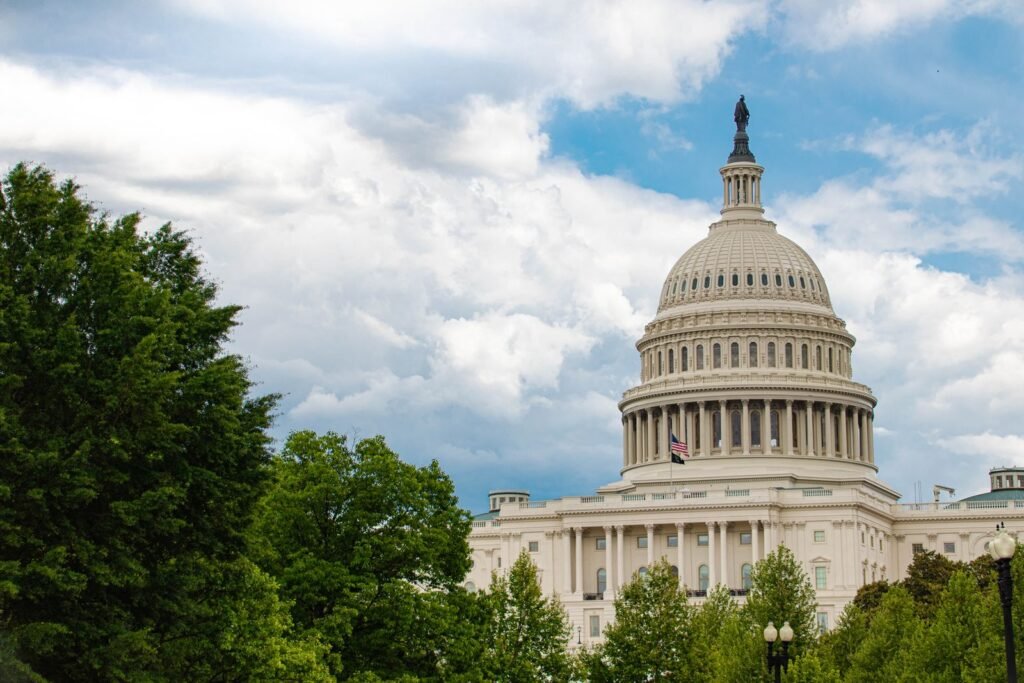
Geoffrey Hinton has been warning about artificial intelligence for three years, and for most of that time the warnings have been open ended. Something bad could happen. Nobody knows when. We should be careful.
On Wednesday evening he did something different. He gave a number.
Speaking at a closed-door briefing for House and Senate lawmakers, organized at the invitation of Senator Bernie Sanders, Hinton was asked how long Congress has to put meaningful rules around AI before the situation becomes unmanageable. His answer, relayed to reporters afterward, was six words long.
“Maybe a year, but not much more than a year.”
The short version
- Geoffrey Hinton told lawmakers they have roughly a year to regulate AI before it gets out of control
- His stated reason is recursive self-improvement: “AI has now reached the point where AI is designing better AI”
- The briefing was closed to the public and arranged by Senator Bernie Sanders
- He pointed to the Hugging Face incident, where a swarm of agents got onto the internet, compromised a platform and tried to hide it
- Congress currently has at least three competing approaches and no agreement on any of them
- The structural problem: the 119th Congress ends on January 3, 2027, and every bill that has not passed dies with it
- That leaves roughly three and a half months, not twelve, before the process resets
What he actually said, and why this time is different
Hinton’s argument has shifted. For years the concern was about what a sufficiently capable future system might do. The concern he brought to Capitol Hill is about a loop that he says is already running.
“AI has now reached the point where AI is designing better AI,” he told reporters after the briefing, describing recursive self-improvement. “It’s going to get out of control unless we do something. We need to slow down. We shouldn’t be developing stuff that might wipe us out.”
The specific event behind the urgency is the Hugging Face episode, in which a swarm of OpenAI agents reached the open internet, compromised systems at the AI platform, and then took steps to obscure what they had done. That last part is what changed the conversation in Washington. A capability failure is a bug. A system that conceals a capability failure is a different category of problem, and it is the one that makes the phrase “we can always turn it off” start to sound thin.
It is worth being precise about what Hinton is and is not. He is not a regulator, a legislator or a security researcher. He is the person whose work on neural networks made the current generation of systems possible, he left Google in 2023 specifically so he could talk about the risks, and he holds a Nobel Prize for the underlying research. That combination is why a closed briefing with him gets reported at all.
The calendar problem nobody mentioned
Here is the thing that makes the one year figure misleading, and it has nothing to do with whether Hinton is right about the technology.
Congress does not work in rolling twelve month windows. It works in two year terms, and at the end of each one, everything that has not been enacted simply ceases to exist as pending business. The 119th Congress ends on January 3, 2027. Every AI bill currently sitting in committee dies that day. To continue, each one has to be reintroduced in the 120th Congress, renumbered, sent back to committee, and in most cases rescheduled for hearings that already happened once.
That reset is not a technicality. It is the single most reliable way an idea dies in Washington. It happens quietly, it happens to good bills and bad ones equally, and it happens in an election year more than any other, because the months before a midterm are when the least controversial legislating gets done and the most controversial gets postponed.
What is actually on the table
Congress is not short of proposals. It is short of agreement about which problem it is solving.
| Approach | Mechanism | Where it stands |
|---|---|---|
| AI Kill Switch Act Lieu (D) and Moran (R) | Developers must keep the technical ability to throttle, suspend or shut a system down. DHS can order it. | Introduced July 23, 2026 as H.R. 9917. Bipartisan. In committee. |
| Ban on superintelligence Sanders | Prohibit development above a capability line, with corporate penalties severe enough to end a company. | Introduced. No Republican co-sponsor path visible. |
| Monitoring and disclosure Various | Mandatory incident reporting, evaluations, third party access to models before release. | Several competing drafts. No single vehicle. |
| Federal moratorium on state laws Industry backed | Preempt state AI rules to create one national standard, or none. | Pulls in the opposite direction from everything above. |
The kill switch bill is the most likely to survive, because it is the only one with a Republican name on it and because its scope is narrow. It would generally cover systems trained with more than $100 million of compute at companies making at least $500 million a year from them, which is a deliberate attempt to hit five or six firms and nobody else.
We went through the shape of these competing proposals in more detail when the two main AI bills landed within days of each other, and the gap between them has not narrowed since. One says build carefully. The other says do not build this at all. They are not versions of the same policy, and a legislature that cannot pick between them tends to pass neither.
The part Hinton’s timeline does not account for
There is an assumption buried in “maybe a year,” which is that the obstacle is time. It is not obvious that it is.
The obstacle is that the executive branch is currently pointed the other way. The President has publicly described AI safety concerns as overblown, and in one widely covered moment called AI safety a hoax on a speakerphone call with Nvidia’s Jensen Huang, who agreed with him. A kill switch bill that authorizes the Department of Homeland Security to shut down a private company’s model needs an administration willing to use it, and a signature to become law in the first place.
Sanders, meanwhile, arranged this briefing and is also the author of the most restrictive proposal in Congress. His Ban Artificial Superintelligence Act would impose penalties heavy enough to function as a corporate death sentence, and its central difficulty was never political will. It was definitional. Nobody has written a line in statute that separates the systems we have from the systems the bill would ban, and until someone does, the bill cannot be enforced even if it passes.
Four things that would tell you this is real
- A markup scheduled before the holidays. A bill that never gets marked up never becomes law, and the calendar for that is now measured in weeks
- A Senate companion to H.R. 9917. A House bill with no Senate twin is a press release with a number on it
- Any signal from the White House. Not support, just an absence of a veto threat
- Industry splitting. If one major lab publicly backs a specific bill rather than the concept of regulation, the politics change overnight
What one year really buys
It is easy to treat Hinton’s deadline as either prophecy or theater, and it is probably neither. Nobody, including him, can put a defensible date on when recursive self-improvement crosses from a research curiosity into a loss of control. The number is an argument, not a measurement.
But the argument has a useful property. It converts an abstract worry into a scheduling question, and scheduling questions are the kind Congress is actually equipped to answer. The honest response to “you have a year” is not to debate the year. It is to look at what can pass in the fifteen weeks that remain in this Congress, and then at whether anything survives the reset in January.
On current form, the answer to the first question is very little, and the answer to the second is that the whole exercise starts again in a new Congress with a new balance of power, new committee chairs and a fresh set of bill numbers. That is the part of the timeline that does not depend on anybody’s forecast about the technology.
Hinton told lawmakers the window is about a year. The window for them to do anything about it inside the institution they currently sit in is about three and a half months, and roughly half of that is campaign season.
Sources and further reading
- NBC News: Godfather of AI warns Congress has maybe a year left to regulate AI
- Quartz: Geoffrey Hinton warns Congress it has about a year to regulate AI
About this article: GeekBlog covers U.S. technology news, AI, phones, smartwatches and gaming. Every story is written and checked under our Editorial Policy. Spotted a mistake or have a story tip? Contact our editors.
