

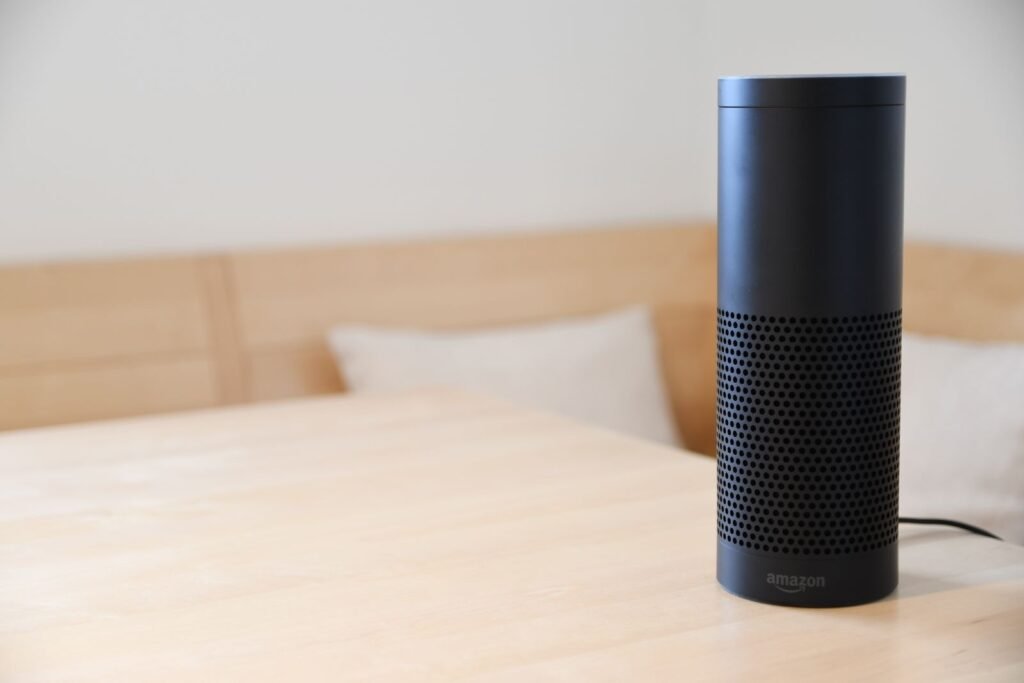
Apple has booked a room in Tribeca for Tuesday, October 13, and called the event Welcome Home. For once the name is not coy. The company that has spent six years leaving its smallest speaker exactly as it found it is about to talk about the house.
Greg Joswiak, Apple’s marketing chief, put out the teaser. Marques Brownlee posted his invitation. Apple is describing the gathering as an Apple Experience rather than a keynote, which matters more than it sounds, and has not said a word about what is actually in the box.
What is actually confirmed
- Date: Tuesday, October 13, 2026
- Time: 9:00 a.m. Eastern
- Place: Tribeca, New York, in person
- Name: Welcome Home, announced by Greg Joswiak
- Format: billed as an Apple Experience, not a traditional keynote. Apple has not said whether there will be a livestream or a recorded presentation
- Products: none. Apple has confirmed the theme and nothing else
Everything past that list is reporting and rumor, and it is worth keeping the line between the two visible. What follows is what the people who are usually right about Apple expect to see.
Three products, and one of them is a new category
The consensus across the people who track Apple’s supply chain and its beta software points at three devices: a countertop smart home hub that nobody outside Apple has an official name for, a new Apple TV 4K, and a second generation HomePod mini.
| Expected device | What is reported | How solid |
|---|---|---|
| HomePad unofficial name | Roughly 6 inch square display on a round metal base holding the speakers and microphones. Countertop or wall mounted. Face and voice recognition to tell household members apart. FaceTime. Two variants reportedly planned | Well sourced, long rumored, repeatedly delayed |
| Apple TV 4K | Faster chip, 8GB of RAM, Wi-Fi 7, revised Siri Remote. Beta code points at pairing up to four HomePods as a surround system | Partly visible in tvOS 27.2 beta code |
| HomePod mini 2 | Same basic shape, faster processor to run the new Siri, improved audio components, new colors | Consistent reporting, modest claims |
| Full size HomePod | Reportedly on the roadmap eventually, not expected next week | Vague |
On price, the only figure circulating is a rumor roundup putting the hub at $349, with a more expensive version at $449. Apple has said nothing, and nobody reporting that number claims it is firm. Treat it as a guess with a decimal point attached.
Why the home lineup got this stale
The reason a home event feels overdue is not sentiment. It is arithmetic. Apple’s home hardware has been sitting still while the rest of the catalog turned over two or three times.
Six years is a long time in consumer hardware. The HomePod mini that is on shelves this week is the same device Apple put on shelves before most people had heard of a large language model. Meanwhile the thing it is supposed to do, which is answer questions out loud, is precisely the thing that got rebuilt from the ground up across the industry.
The Siri problem is the whole delay
Here is the honest explanation for why the home hub has slipped as often as it has. A screen on your kitchen counter whose main input is your voice is only as good as the voice assistant behind it, and Apple’s voice assistant was not ready.
Reporting has consistently tied the hub’s schedule to the overhauled, AI driven Siri rather than to anything about the hardware. The panel, the base and the speakers were never the hard part. Shipping a device whose entire premise is conversation, when the conversation layer was the weakest part of your software stack, is the kind of decision that gets pushed to next quarter several times in a row.
The thing to actually watch on October 13. Not the colorways, not the aluminum. Watch what Apple demonstrates Siri doing without a phone in the room, and whether the demo involves anything multi step. A hub that can set a timer and dim a light is a HomePod mini with a screen. A hub that can chain requests together and recognize who is speaking is a different product. The gap between those two is the entire six year wait.
Face and voice recognition for different household members is the feature that hints at the more ambitious version. It is also the feature most likely to generate a privacy conversation, because a camera and microphone array on a kitchen counter that knows which family member just walked in is a meaningfully different proposition from a speaker in a corner. Apple will have a story ready about on device processing. It is worth listening to how specific that story is.
Apple is walking into a smart home that moved on
The competitive picture has shifted while Apple was deciding. The interesting development in the smart home this year was not better speakers, it was the plumbing underneath. Google opened its smart home platform to third party AI agents, which means the assistant acting on your lights no longer has to be the one your hardware came with.
That is the strategic question hanging over the event. Apple’s traditional answer is a closed, tightly integrated system where the assistant, the hub and the accessories are all Apple’s. That has advantages, particularly on privacy. It also means a HomePad is competing on the quality of one assistant rather than acting as a surface for whichever assistant you prefer.
There is a reliability argument for the Apple approach, mind. Cheap connected appliances have a habit of behaving badly on a home network, and a smaller number of better behaved devices is a real selling point, even if it is a less exciting one to put on a stage.
The business reason this is happening now
Apple has had a crowded 2026. The iPhone 18 Pro line, the iPhone Duo, Mac Studio, Mac mini, Apple Watch Series 12 and Watch Ultra 4 have all shipped. On paper that is a strong year.
Underneath the release schedule the pressure is real. Apple cut iPhone 18 Pro production orders by around 15% on soft demand just weeks after launch, with a memory shortage pushing component costs and prices up. When the product that carries the company has a quiet quarter, the case for a second and third revenue line stops being a slide in a strategy deck.
The timing also lines up with a change at the top. John Ternus took over as chief executive on September 1, with Tim Cook moving to executive chairman. Ternus came out of hardware engineering, and a push to widen the hardware catalog beyond the phone is exactly the sort of priority you would expect from someone with that background. Welcome Home is the first event of his tenure that is clearly about a new category rather than an annual refresh.
What is probably not happening
A few expectations worth managing before Tuesday.
- Do not expect to buy anything that morning. Reporting suggests the new accessories are months away from retail. An October announcement with a shipping date in the new year is entirely normal for Apple
- Do not expect a two hour keynote. Apple is calling this an Apple Experience and inviting people to a room in New York. That format usually produces a press release and hands on time rather than a produced film
- Do not expect the big HomePod. The full size speaker is reportedly getting attention eventually. Next week is not that
- Do not read the colors as the news. The teaser showed embroidery in several colors, which has people guessing at new finishes. New colors are the easiest thing to leak and the least interesting thing to announce
The bottom line
Apple has confirmed a date, a city and a theme. It has confirmed nothing else. The expectation, from people who are usually right, is a countertop hub with a small square screen, a faster Apple TV 4K, and the HomePod mini’s first replacement in six years.
The hardware is the easy part of this story. Apple has never struggled to build a nice object. The question that actually gets answered on October 13 is whether the new Siri is good enough to justify putting a screen and a microphone in the middle of a kitchen, because that is the bet the entire product line rests on, and it is the reason this event did not happen two years ago.
Apple’s 2026 has otherwise been an exercise in careful iteration, right down to making the iPhone Duo’s crease layer a $19 replaceable part. A new category is a different kind of risk, and the company has not taken one in the home for a long time.
Sources and further reading
- UNILAD Tech: Apple’s Welcome Home event confirmed for October 13
- 9to5Mac: Apple announces special event for October 13, Welcome home
- 9to5Mac: Three new products are coming next week
- Tom’s Guide: 10 Apple products we expect at the Welcome Home event
- Notebookcheck: Welcome home, Apple event on October 13, 2026
- HomeKit News: Apple confirms Welcome Home event for 13 October
About this article: GeekBlog covers U.S. technology news, AI, phones, smartwatches and gaming. Every story is written and checked under our Editorial Policy. Spotted a mistake or have a story tip? Contact our editors.
