

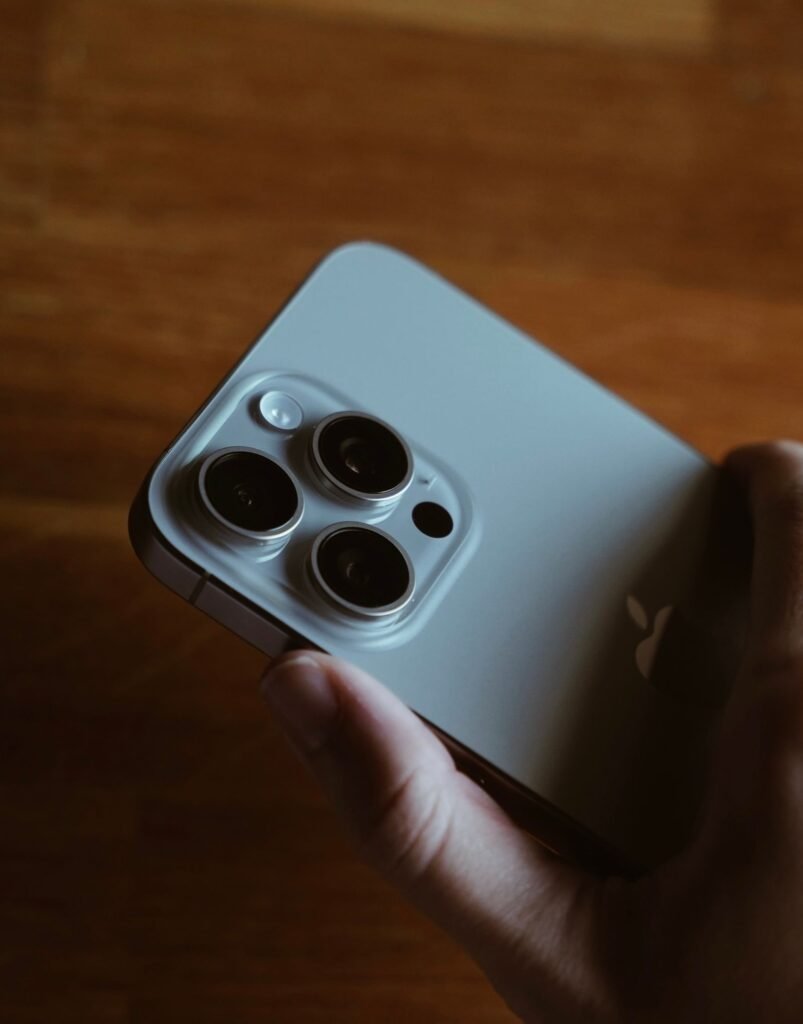
Apple now sells two very different answers to the question “what is the best iPhone?” The iPhone 18 Pro is the familiar one: a 6.3-inch slab with the best cameras Apple has ever shipped, starting at $1,199. The iPhone Duo is the strange new one: a passport-shaped phone that opens into a 7.6-inch mini tablet, starting at $1,999.
Both run on the same A20 Pro chip with 12GB of RAM, so this is not a fight about speed. It is a fight about what $800 should buy you. On the Duo, that money pays for a second, much larger screen and Apple Pencil support. It does not pay for a better phone. In several ways that matter every day, the Duo is the lesser phone of the two.
The spec sheet in one table
Start with the obvious: under the glass, these phones are siblings. The chip, memory, peak brightness, refresh rate and storage tiers are identical. The differences cluster in three places: the screens, the cameras and the way you unlock the phone.
| iPhone Duo | iPhone 18 Pro | |
|---|---|---|
| Starting price | $1,999 (256GB) | $1,199 (256GB) |
| Screens | 7.6in foldable OLED (2670 x 1878) plus 5.4in cover OLED | 6.3in OLED (2622 x 1206) |
| Refresh rate and brightness | 1 to 120Hz, 3,000 nits peak | 1 to 120Hz, 3,000 nits peak |
| Chip and RAM | A20 Pro, 12GB | A20 Pro, 12GB |
| Rear cameras | 48MP f/1.6 wide, 48MP ultrawide | 48MP f/1.5 to f/4.0 variable aperture wide, 48MP ultrawide, 48MP 4x telephoto |
| Front cameras | 12MP (cover), 4MP under display (inner) | 18MP |
| Biometrics | Touch ID in the side button | Face ID |
| Apple Pencil | Yes, on the inner screen | No |
| Battery | 4,883mAh | 4,288mAh (eSIM, US) / 4,056mAh (SIM tray) |
| Wired charging | 50% in about 20 min (60W+) | 50% in about 15 min (60W+) |
| Size | 117.8 x 84.1 x 11.3mm folded, 5.2mm thick open | 150 x 71.9 x 8.8mm |
| Weight | 254g | 211g |
| Frame | Titanium, glass back | Aluminum, metal and glass back |
| Durability | IP68, Ceramic Shield 2 front | IP68, Ceramic Shield 2 front |
Green cells mark the stronger side. Count them and the 18 Pro wins more rows. The Duo wins the two rows that justify its existence: screen size and Pencil support.
Price: the gap grows as you add storage
The headline difference is $800 at 256GB, and Apple keeps that exact gap at every storage tier. What changes is how big $800 looks next to the rest of the bill.
| Storage | iPhone Duo | iPhone 18 Pro | Duo premium |
|---|---|---|---|
| 256GB | $1,999 | $1,199 | +$800 (67% more) |
| 512GB | $2,199 | $1,399 | +$800 (57% more) |
| 1TB | $2,599 | $1,799 | +$800 (44% more) |
| 2TB | $3,199 | $2,399 | +$800 (33% more) |
So the dollar gap is a flat $800 at every tier, but in relative terms the Duo looks least outrageous at the top. If you were already going to buy a 1TB or 2TB 18 Pro, the jump to a Duo is a smaller share of what you are spending. If you were eyeing the base 18 Pro, the Duo costs two thirds more.
Carrier promotions muddy this. T-Mobile has been advertising up to $1,200 off the Duo with a new line or trade-in, and Verizon launched with a bundle around $70 a month including the plan. Those deals lock you into a 24 to 36 month bill credit schedule, so they lower the sting without changing the math if you ever want to leave early.
Screens: this is where the money goes
Spec sheets list diagonals, which hide how different these displays really are. A 7.6-inch screen with a squarish 1.4:1 shape has far more usable area than a tall 6.3-inch phone screen. We worked out the actual surface area of each panel from Apple’s resolutions and diagonals.
That 80% jump is the whole pitch. The Duo’s inner panel runs at 1878 x 2670 with a 120Hz refresh rate and 3,000 nits peak, plus a matte nano-texture coating. The coating cuts glare and does a surprisingly good job of hiding the crease when you look at the screen head on. Tilt it and the crease is still there. Its 1.4:1 shape is great for two apps side by side, ebooks and games. It is less great for most YouTube and Netflix content, which still plays in 16:9 with black bars above and below.
The flip side gets less attention. Folded, the Duo’s 5.4-inch cover screen is about 10% smaller than the 18 Pro’s display, and Apple adds a side dock on that cover screen that some reviewers found cramped. If you spend most of the day with the phone closed, typing quick replies and scrolling feeds, the Duo is the smaller, fiddlier phone.
Quality is a draw. Both use LTPO Super Retina XDR OLED at roughly 430 to 460 pixels per inch, both hit 3,000 nits, and both scale down to 1Hz for the always-on display.
Cameras: the 18 Pro wins without much argument
This is the clearest split in the whole comparison. Apple had to cut somewhere to fit a hinge and two displays into a body that is 5.2mm thin when open, and the camera paid.
- Main camera. Both are 48MP, but the 18 Pro’s sensor has a variable aperture from f/1.5 to f/4.0, which lets it gather more light at night and get a deeper focus range for close subjects and groups. The Duo’s is fixed at f/1.6.
- Zoom. The 18 Pro has a 48MP 4x telephoto and handles 8x well by cropping it. The Duo has no telephoto at all. Its 2x is a crop of the main sensor, and anything past that degrades fast.
- Ultrawide. Identical 48MP f/2.2 units with a 120-degree view.
- Selfies. The 18 Pro’s 18MP front camera beats the Duo’s 12MP cover camera, and both crush the Duo’s 4MP under-display camera on the inner screen, which is fine for video calls and little else.
The Duo is not a bad camera phone. Its main and ultrawide shots look like a recent iPhone, and reviewers praised its Center Stage selfie camera. But if you shoot kids at sports games, concerts or anything far away, you will notice the missing telephoto every week.
Battery: bigger cell, not longer life
The Duo has the bigger battery on paper, 4,883mAh against 4,288mAh for the US eSIM-only 18 Pro. It also has a much larger screen to light up, and the test results show it.
Apple’s own numbers tell the story if you read them carefully. Leave the Duo shut and it is rated for 44 hours of video. Open it and that drops to 31 hours, three hours less than the 18 Pro. In TechRadar’s standardized lab test, the 18 Pro ran for 16 hours 17 minutes, while the Duo managed roughly 13 hours. Other outlets got very different Duo results, from The Verge’s warning that it may not last a heavy day to PCMag’s 18 hours 15 minutes of streaming, which we unpacked in our roundup of iPhone Duo battery tests.
Charging is close. With a 60W or stronger USB-C charger, the 18 Pro hits 50% in about 15 minutes and the Duo in about 20. Both reach 50% in 30 minutes on a 35W MagSafe charger.
Performance and software: a tie, with a caveat
Same A20 Pro, same 12GB of RAM, same vapor chamber cooling. Benchmarks and daily speed are effectively identical. The Duo shipped with iOS 27.1 and the 18 Pro with iOS 27, and both are on iOS 27.2 now, so expect the same support window.
The caveat is app support. Apple’s own apps, like Mail, Safari, Notes and Books, use the Duo’s inner screen well, and split view works by dragging an app sideways from the bottom edge. Plenty of third-party apps, including Instagram and LinkedIn at launch, still look stretched or letterboxed. That should improve as developers ship Duo layouts, but it is a real first-generation cost today. The 18 Pro has no such issue because every app is built for its shape.
Durability and repair: the Duo carries more risk
Both phones are IP68 and both use Ceramic Shield 2 on the front. That is where the similarity ends. A folding screen has a hinge with more than 100 parts and a flexible inner panel that can be scratched by a fingernail. Apple has confirmed that a “small number” of Duo units cracked along the fold shortly after launch and is replacing them under warranty.
The bigger worry is what happens after year one. Out of warranty, Apple lists an inner display repair on the Duo at $999, half the phone’s starting price. With AppleCare+ the fee drops to $99. We broke down what Apple’s free cracked Duo swap covers and what it will cost later. On the 18 Pro, a broken screen is a routine repair with an AppleCare+ fee of $29. For the Duo, we would treat AppleCare+ as part of the purchase price.
The $1,898 alternative: iPhone 18 Pro plus iPad mini
A popular argument online goes like this: the new OLED iPad mini costs $699, the iPhone 18 Pro costs $1,199, and together they come to $1,898. That is $101 less than one Duo, and you get the better phone and a bigger tablet.
| iPhone Duo | iPhone 18 Pro + iPad mini | |
|---|---|---|
| Total price | $1,999 | $1,898 |
| Largest screen | 7.6in | 8.5in |
| Telephoto and Face ID | No | Yes |
| Fits in a jeans pocket | Yes, all of it | Only the phone |
| Weight you carry | 254g | About 465g with both |
| Things to charge | One | Two |
| Cellular on the big screen | Included | $150 more for the cellular iPad |
On value, the pair wins easily. On convenience, it does not, and that is the point TechRadar’s phones editor made when the argument started circulating: owning a phone and a small tablet is not the same experience as owning one device that becomes a tablet whenever you want it. An 8.5-inch iPad mini still does not go in a pocket. If you already carry a bag every day, the pair is the smarter buy. If you do not, the Duo is the only way to have that much screen on you at all times. Note too that the mini’s 128GB base storage is half the Duo’s, and its OLED panel tops out at 60Hz.
Who should buy which
- Read, edit documents or run two apps side by side on the go
- Want to sketch or take handwritten notes with an Apple Pencil on your phone
- Would otherwise carry a tablet and hate doing it
- Are fine paying for AppleCare+ and living with Touch ID
- Care about zoom, low light or portrait shots
- Use your phone mostly one-handed
- Want Face ID and the lightest, most familiar design
- Would rather keep $800 or put it toward an iPad mini
If you are torn between the 18 Pro and Apple’s thinnest phone instead, our look at what the extra $100 over the iPhone Air buys covers that decision.
Frequently asked questions
Is the iPhone Duo faster than the iPhone 18 Pro?
No. Both use the A20 Pro chip with 12GB of RAM and a vapor chamber, and they perform the same in benchmarks and daily use. The Duo only feels different because games and apps can use its larger screen.
Does the iPhone Duo have Face ID?
No. It uses Touch ID built into the side button. The iPhone 18 Pro keeps Face ID in the Dynamic Island.
Which has the better camera?
The iPhone 18 Pro. It adds a 48MP 4x telephoto and a variable aperture main camera, and its 18MP selfie camera beats the Duo’s front cameras. The Duo has only a main and an ultrawide camera on the back.
Which has better battery life?
It depends on how you use the Duo. Closed, Apple rates it for 44 hours of video, well above the 18 Pro’s 34. Open, it drops to 31 hours. In TechRadar’s lab test the 18 Pro lasted 16 hours 17 minutes against about 13 hours for the Duo.
Does the iPhone 18 Pro support Apple Pencil?
No. Apple Pencil support is exclusive to the Duo’s 7.6-inch inner screen among current iPhones.
Is the iPhone Duo worth $800 more?
Only if you will use the big screen daily. As a phone, the 18 Pro is better in most ways. The Duo’s value is in replacing a tablet you would otherwise carry.
Sources and further reading
- TechRadar: iPhone Duo vs iPhone 18 Pro, which should you choose?
- TechRadar: The iPhone 18 Pro and iPad mini cost less than an iPhone Duo, but the math misses the point
- TechRadar: iPhone 18 Pro and Pro Max battery lab results
- Apple: Compare iPhone models
About this article: GeekBlog covers U.S. technology news, AI, phones, smartwatches and gaming. Every story is written and checked under our Editorial Policy. Spotted a mistake or have a story tip? Contact our editors.
