

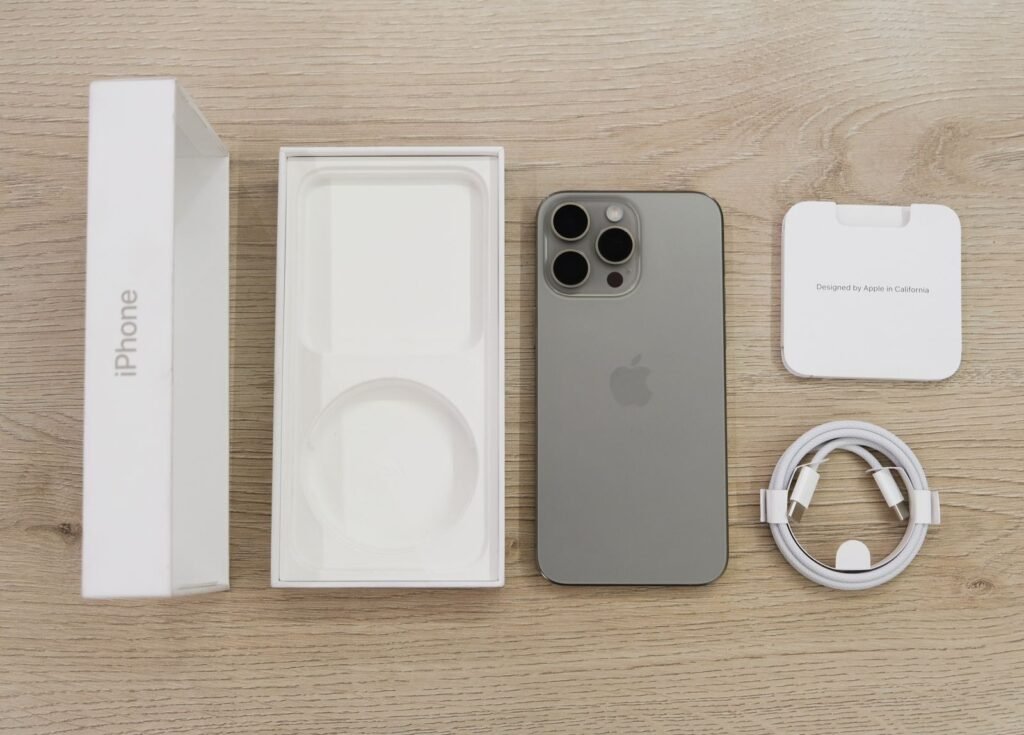
There is a specific category of hardware problem that companies hate admitting to, and Apple just admitted to it. Not “we are investigating.” Not “a fix is coming in the next update.” The actual wording amounts to: on some of these phones, the damage is already done, and the only remedy is a different phone.
The handset is the iPhone 18 Pro Max. The network is AT&T. The symptom is that the phone stops being a phone.
If your iPhone 18 Pro Max is on AT&T, read this first
- Still getting signal? Install iOS 27.0.1 now and let the carrier settings update land. Both are preventative
- Already stuck on SOS with no calls, texts or data? Updating will not help. You need the handset swapped, and Apple is doing it at no charge
- Where to go: Apple Support, an Apple Store, or AT&T by phone or in a store
- Other carriers: no equivalent reports so far, per MacRumors. This looks specific to AT&T
What is actually going wrong
The iPhone 18 Pro and Pro Max went on sale last month, starting at $1,099. Within days, a cluster of AT&T customers on the Pro Max started reporting the same thing: the phone drops off the network and will not come back. No calls. No texts. No mobile data. The status bar shows SOS, which is the iOS way of saying it can still dial emergency services and nothing else.
For about a week the story looked like an ordinary software bug with an ordinary software fix. AT&T told affected customers that an iOS update would sort it out. Apple shipped iOS 27.0.1. Some people updated and got their service back, which fit the theory.
Then the people whose phones stayed dead after updating started posting, and Apple put out a statement that quietly reframed the whole thing.
“We have identified an issue affecting a small number of iPhone 18 Pro Max users on the AT&T network that may cause a device to lose service and be unable to make calls. We released iOS 27.0.1 earlier this week and strongly encourage all iPhone 18 Pro Max users to update now, and are also issuing a carrier settings update today. These updates together are meant to help prevent this issue from occurring.”
Apple, in a statement on the iPhone 18 Pro Max cellular issue
Read the last sentence again. “Meant to help prevent this issue from occurring.” Not meant to resolve it. Apple has since confirmed directly that handsets which have already lost service will not recover through software, and that those customers need a replacement unit.
In other words, the updates are a vaccine, not a cure. If the phone has already crossed the line, it stays across it.
Which branch are you on?
This is the bit most of the coverage flattens, and it is the only bit that changes what you should do today. There are three possible states for an AT&T iPhone 18 Pro Max right now, and the correct action is different in each.
What the two updates actually do
Apple is asking people to install two separate things, and they are not the same kind of thing. That distinction explains why updating helps some people and not others.
| Update | What it is | What it will not do |
|---|---|---|
| iOS 27.0.1 | A full operating system point release. Installed manually from Settings | Restore service on a handset that has already failed |
| Carrier settings | A small configuration bundle from AT&T that tells the modem how to behave on the network. Rolls out automatically over roughly two weeks | Reverse the condition. It changes behaviour going forward |
| Hardware swap | A different physical handset, provided at no charge | Be avoidable, if your phone is already affected |
Apple has not published a technical explanation of why the state is irreversible, and until it does, the honest answer is that we do not know the mechanism. What the behaviour is consistent with is something in the cellular subsystem being written into a state that the operating system cannot reach or rewrite, which is why a clean install does not help and a new unit does.
How to install both, in order
Two minutes of work, and worth doing today rather than waiting for the automatic rollout.
- Operating system first. Settings, then General, then Software Update. You want iOS 27.0.1 or later. Let it finish and reboot
- Then carrier settings. Back to Settings, General, About. If an update is waiting, a prompt appears within a few seconds of opening that screen. Tap it
- Check the result. On the same About screen, the Carrier line shows the version number of the settings file that is active
- Keep Wi-Fi on while you do this. Obvious, but if the phone is already struggling for signal, the download has to come over Wi-Fi anyway
Before you hand the phone over. If you are heading for a replacement, back up to iCloud or a computer first and make sure you can receive two-factor codes some other way. A phone with no cellular service cannot receive an SMS code, which is a genuinely awkward problem if your Apple Account recovery is set up to use one. Sort that out over Wi-Fi before you walk into the store.
The pattern this fits into
Every iPhone generation produces a crop of early complaints, and most of them turn out to be either software or overstated. What makes this one unusual is not the scale, which Apple describes as small, but the shape: a confirmed hardware outcome on a shipping flagship, acknowledged within weeks of launch, with a free replacement programme rather than a patch.
It also lands in an unusually busy month for Apple’s product calendar. The company has a separate pre-order process running for the iPhone Duo, with a dress rehearsal step built in because of yield problems, which tells you something about how tight the supply chain has been this cycle. A replacement programme on the Pro Max is not free of consequences for inventory.
And it is another entry in a longer theme of Apple features and fixes whose availability depends entirely on which hardware you happen to own. The CarPlay video playback feature that shipped without any compatible cars to play it in is the benign version of the same story. This is the version where the hardware dependency costs you a working phone.
Worth noting too that the fault appears to be carrier specific rather than universal, which is a reminder that a phone is not one product. It is a device plus a network plus a configuration file, and the interaction between those three is where a surprising number of real-world failures live. That is also why features like Qi2 magnet support vary so much between handsets that look identical on a spec sheet.
What to watch next
- Whether the replacement programme gets formalised. Right now this is case-by-case through support. A named service programme with a serial number checker would make it far easier for owners to know where they stand
- Whether other carriers report it. So far nobody has. If a second network surfaces the same symptom, the explanation changes
- Whether the preventative updates hold. The real test of iOS 27.0.1 and the new carrier file is the absence of new reports two or three weeks from now
- A technical post-mortem. Apple rarely explains the mechanism behind a hardware fault, but it occasionally does when the alternative is weeks of speculation
- Replacement stock. A Pro Max swap programme in the first weeks of a launch competes directly with new sales for the same units
The bottom line
If your iPhone 18 Pro Max is on AT&T and still working, install iOS 27.0.1 and take the carrier settings update, and you have done everything available to you. If it is sitting on SOS with no calls, texts or data, stop troubleshooting. No reset, no restore and no update is going to bring it back, and Apple has said as much.
The good news, such as it is, is that Apple is not arguing about it. The replacement is free and the company has acknowledged the fault in public, which is the fastest path to a working phone that exists here. The less good news is that you are swapping a flagship handset a few weeks into owning it, and the only reason anyone knows that is necessary is that enough customers kept posting after the update was supposed to have fixed it.
Sources and further reading
- Macworld: Apple confirms the iPhone cellular issue and admits affected units cannot be fixed
- Daring Fireball: Apple confirms iPhone 18 Pro Max AT&T cellular issues require hardware replacement
- AppleInsider: AT&T initially told customers an iOS update would fix the call problems
- Android Authority on the scope of the issue and the replacement route
- iDrop News: AT&T iPhone 18 Pro Max cellular issues need a hardware swap
- Gotechtor on why iOS 27.0.1 did not fix every affected handset
- UNILAD Tech: Apple offers free replacement iPhone 18 Pro Max after admitting the flaw cannot be fixed
About this article: GeekBlog covers U.S. technology news, AI, phones, smartwatches and gaming. Every story is written and checked under our Editorial Policy. Spotted a mistake or have a story tip? Contact our editors.
